
Table of Contents
Toggle🍲 Healthy Comfort Foods Made Simple: A 5-Day Real Food Meal Plan
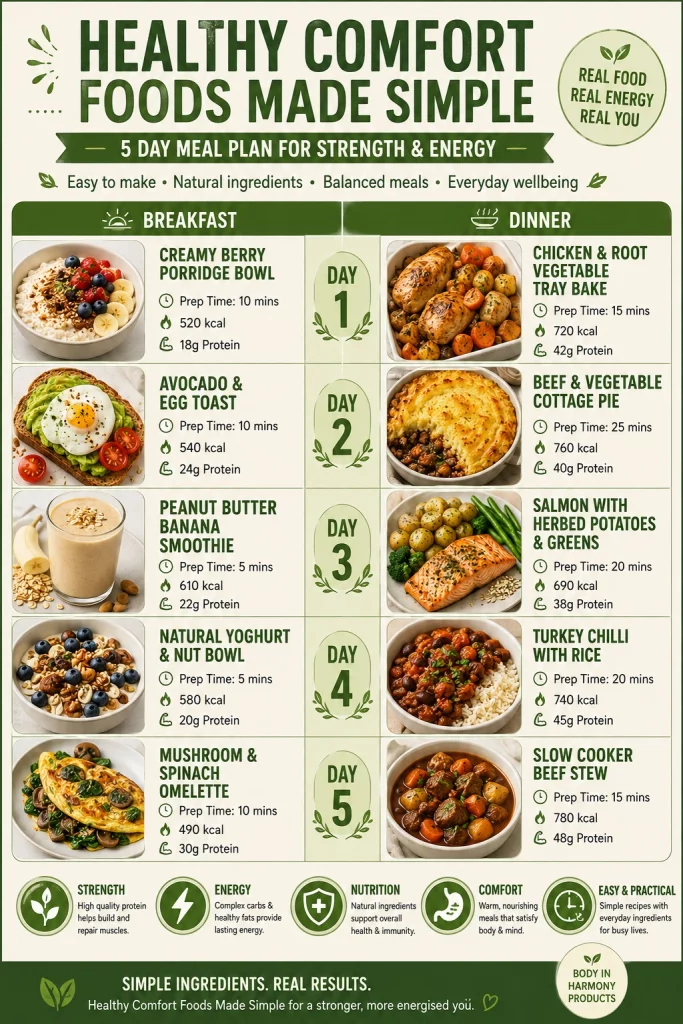
Healthy Comfort Foods Made Simple. Comfort food does not have to mean heavily processed meals, ready meals or food loaded with ingredients you barely recognise.
As a nutritionist and Ayurvedic herbalist, I look at comfort food as something that should leave you satisfied, nourished and properly fed.
This five-day Healthy Comfort Foods plan uses everyday ingredients, decent protein, useful carbohydrates, healthy fats and herbs and spices that bring flavour without making cooking complicated.
🌞 Day 1
🥣 Creamy Berry Porridge
Approx. 520 kcal | 18g protein
Ingredients
- 80g rolled oats
- 1 banana
- Handful of mixed berries
- 150g Greek yoghurt
- 1 tbsp chia seeds
- 1 tsp honey
- Whole milk
Method
- Simmer the oats and milk for around five minutes.
- Stir through the banana and berries.
- Top with yoghurt, chia seeds and honey.
Oats provide carbohydrates and soluble fibre, while yoghurt adds protein and calcium.
From an Ayurvedic point of view, warm porridge also makes more sense for many people than starting a cold morning with an icy breakfast straight from the fridge.
🍗 Chicken and Root Vegetable Tray Bake
Approx. 720 kcal | 42g protein
Ingredients
- 2 chicken thighs
- Baby potatoes
- Carrots
- Red onion
- Parsnips
- Garlic
- Olive oil
- Thyme or rosemary
Method
- Chop the vegetables and place them on a baking tray.
- Add the chicken and drizzle with olive oil.
- Season with garlic and herbs.
- Roast at 200°C for around 40 minutes, until the chicken is thoroughly cooked.
Chicken thighs give you protein and more flavour than very lean breast meat.
Root vegetables provide carbohydrates, while rosemary, thyme and garlic bring traditional herbs into an ordinary meal rather than leaving them sitting forgotten in the cupboard.
🌞 Day 2
🥑 Avocado and Egg Toast
Approx. 540 kcal | 24g protein
Ingredients
- 2 slices sourdough bread
- 2 eggs
- 1 avocado
- Cherry tomatoes
- Black pepper
Method
- Toast the sourdough.
- Mash the avocado over the toast.
- Add poached or fried eggs.
- Finish with tomatoes and black pepper.
Eggs provide complete protein, choline and vitamin B12.
Avocado adds mainly monounsaturated fat and fibre, making this a substantial breakfast without requiring an enormous portion.
🥧 Beef and Vegetable Cottage Pie
Approx. 760 kcal | 40g protein
Ingredients
- Beef mince
- Potatoes or sweet potatoes
- Carrots
- Peas
- Onion
- Beef stock
- Thyme
Method
- Brown the beef and onion.
- Add the vegetables, stock and thyme.
- Simmer until thickened.
- Top with mashed potato and bake for around 30 minutes.
There is nothing wrong with proper comfort food when the ingredients are doing something useful.
Beef supplies protein, iron and vitamin B12, while potatoes and vegetables provide carbohydrate, fibre and a wider range of nutrients.
🌞 Day 3
🥤 Peanut Butter Banana Smoothie
Approx. 610 kcal | 22g protein
Ingredients
- 1 banana
- 50g oats
- 2 tbsp peanut butter
- 250ml whole milk
- 2 dates
- Cinnamon
Blend everything until smooth.
This works particularly well when appetite is low or mornings are rushed.
Cinnamon adds flavour without needing spoonfuls of extra sugar, while oats, milk and peanut butter turn it into something much more substantial than fruit juice.
🐟 Salmon, Herbed Potatoes and Greens
Approx. 690 kcal | 38g protein
Ingredients
- Salmon fillet
- Baby potatoes
- Broccoli
- Green beans
- Lemon
- Fresh parsley
- Olive oil
Method
- Roast the potatoes with a little olive oil.
- Bake the salmon until cooked through.
- Lightly steam the greens.
- Finish with lemon and parsley.
Salmon provides protein and long-chain omega-3 fats.
This is also a good example of using herbs simply. Fresh parsley and lemon can completely change a meal without needing a bottled sauce full of sugar and salt.
🌞 Day 4
🌰 Greek Yoghurt, Nuts and Berries
Approx. 580 kcal | 20g protein
Ingredients
- Full-fat Greek yoghurt
- Walnuts
- Almonds
- Pumpkin seeds
- Blueberries
- A little honey
Put it in a bowl and eat it.
Not every healthy meal needs a twelve-step recipe.
The yoghurt provides protein and calcium, while nuts and seeds add magnesium, healthy fats and extra calories.
🌶️ Turkey Chilli with Rice
Approx. 740 kcal | 45g protein
Ingredients
- Turkey mince
- Rice
- Kidney beans
- Tomatoes
- Peppers
- Garlic
- Cumin
- Coriander
- Mild paprika
Method
- Brown the turkey with garlic.
- Add peppers, tomatoes and kidney beans.
- Season with cumin, coriander and paprika.
- Simmer for around 25 minutes and serve with rice.
This is where nutrition and herbalism sit comfortably together.
Cumin and coriander have long been used in Ayurvedic cooking around digestion, while beans, turkey and rice give you a practical combination of protein and carbohydrate.
You do not need a cupboard full of supplements when herbs and spices can simply become part of dinner.
🌞 Day 5
🍳 Mushroom and Spinach Omelette
Approx. 490 kcal | 30g protein
Ingredients
- 3 eggs
- Mushrooms
- Spinach
- Red onion
- Cheese
- Mixed herbs
Method
- Gently cook the mushrooms and onion.
- Add the spinach.
- Pour over the beaten eggs.
- Add cheese and herbs, then fold.
Eggs and cheese provide protein, while mushrooms and spinach add variety without making breakfast complicated.
🥘 Slow-Cooked Beef Stew
Approx. 780 kcal | 48g protein
Ingredients
- Beef chunks
- Carrots
- Celery
- Potatoes
- Onion
- Garlic
- Beef stock
- Thyme
- Bay leaf
Method
- Add everything to a slow cooker.
- Cook on low for 6–8 hours.
- Remove the bay leaf and serve.
Slow cooking works brilliantly for tougher cuts of beef and produces exactly what comfort food should be: warm, filling and easy to eat.
From an Ayurvedic perspective, warm cooked meals can also be particularly useful when digestion feels cold, sluggish or unsettled.
If you want to keep that same simple, nourishing approach as the seasons change, have a look at my Healthy Autumn Meals: 6 Seasonal Recipes. It uses seasonal vegetables, herbs and warming spices to create filling meals that suit the colder months without making healthy eating complicated.
🌿 Why Home-Cooked Comfort Food Is Worth the Effort
As a nutritionist, I am more interested in the overall pattern of eating than labelling individual dishes good or bad.
A large UK study involving more than 11,000 adults found that people who ate home-cooked meals more frequently tended to have better overall diet quality and higher fruit and vegetable intake.
The researchers were careful to point out that the study showed an association rather than proving home cooking itself caused those improvements.
Research on Home-Cooked Meals and Diet Quality
That is why Healthy Comfort Foods Made Simple is built around ordinary meals rather than diet food.
Use proper ingredients, include enough protein, add vegetables, use herbs and spices generously and make enough to have another portion tomorrow.
For more substantial meal ideas, read our Healthy Calorie Dense Dinner Ideas from Body in Harmony Products.