
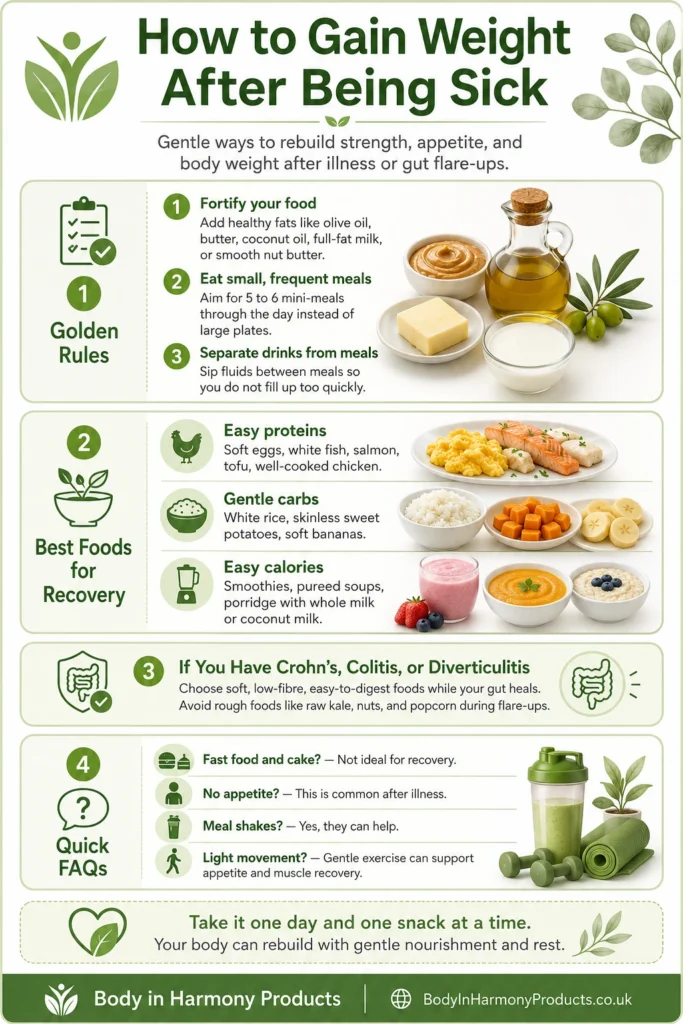
🥗 How to Gain Weight After Being Sick.
If you are trying to work out how to gain weight after being sick, the aim is not to force down huge meals.
After illness, appetite can be poor and normal portions may feel difficult. The easiest approach is usually to make smaller meals more nourishing and eat more often.
From a nutrition perspective, this is where I would start.
🥗 How to Gain Weight After Being Sick With Smaller Meals
Food fortification simply means adding more calories and nutrients without making the meal much bigger.
Try:
- olive oil or butter stirred into potatoes, rice or vegetables
- full-fat milk or yoghurt instead of low-fat versions
- smooth nut butter added to porridge or smoothies
- grated cheese added to eggs, potatoes or soups
- avocado alongside meals
- eggs, fish, yoghurt, chicken, tofu or pulses for protein
This is particularly useful when appetite is low.
The basic principle is simple: more nutrition per mouthful rather than simply more food.
🍽️ Eat Little and Often
Three large meals can feel overwhelming while you are recovering.
Try three smaller meals with two or three snacks between them.
Spacing food through the day can make it easier to increase total calories without making each meal uncomfortable.
🥛 Do Not Fill Up on Drinks Before Meals
Hydration still matters, especially after fever, diarrhoea or vomiting.
However, drinking a large amount immediately before eating can reduce appetite simply because your stomach feels full.
Sip fluids through the day and have most of them between meals if appetite is limited.
🌿 An Ayurvedic Herbalist View of Recovery
From an Ayurvedic herbalist perspective, recovery is not simply about putting calories back in.
After illness, digestion and appetite may both be weaker. Ayurveda would look at Agni, or digestive capacity, before continually increasing portion sizes.
Warm cooked foods, soups, rice, oats and gentle spices such as ginger, cumin or fennel may be easier for some people to manage than large, heavy meals.
Agni is a traditional Ayurvedic concept, not another name for digestive enzymes or metabolism.
The practical point is straightforward: rebuild intake gradually using foods you can digest comfortably and consistently.
🩺 What If You Have Crohn’s, Colitis or Diverticulitis?
This needs more care because Crohn’s disease, ulcerative colitis and diverticulitis are different conditions.
During a flare or recovery period, some people may tolerate softer or lower-fibre foods more comfortably, while others manage a wider range.
The important part is getting enough energy, protein and micronutrients without forcing foods that worsen symptoms.
For diverticulitis, see our guide to what to eat and avoid during a diverticulitis flare.
🥤 Smoothies Can Make Calories Easier
Smoothies can be useful when chewing another meal feels like hard work.
A simple combination might include:
- banana
- full-fat yoghurt
- oats
- smooth nut butter
- milk or fortified alternative
The benefit is not that smoothies bypass digestion.
They simply make it easier to consume calories, protein and nutrients in a manageable volume.
💪 Protein Matters During Recovery
Illness and inactivity can reduce muscle mass as well as body weight.
Protein provides amino acids needed to rebuild and maintain muscle tissue.
A Cochrane review of adults at risk of disease-related malnutrition found that dietary advice, with or without oral nutritional supplements, can improve body weight and some measures of muscle mass and strength.
Dietary Advice With or Without Oral Nutritional Supplements for Disease-Related Malnutrition
That supports using regular protein-containing meals during recovery rather than concentrating on calories alone.
🚫 Do You Need Junk Food to Gain Weight?
No.
You need enough energy, but that does not mean living on cakes, sweets and takeaway food.
Use calorie-dense foods that also provide protein, fats, vitamins and minerals.
Think more nutrition per mouthful.
📚 Free Daily Weight Gain Plan
If you want a simple structure to follow each day, I have also created a free Daily Weight Gain Plan covering meals, snacks and practical ways to increase calories without forcing huge portions.
✅ The Bottom Line
If you want to gain weight after being sick:
- eat smaller meals more often
- add extra calories to foods you already tolerate
- include protein regularly
- use nourishing drinks when appetite is poor
- rebuild gradually rather than forcing large portions
The goal is not simply to put weight back on.
It is to rebuild energy, strength and nutritional status as your body recovers.