
🥗 Diverticulitis Diet: What to Eat and What to Avoid
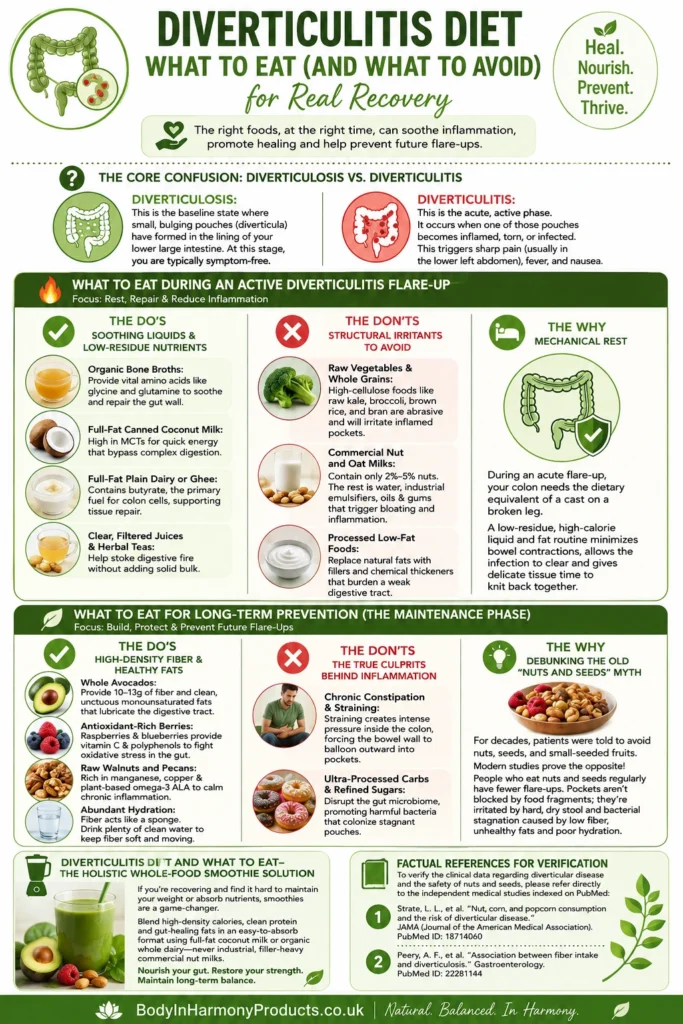
If you are looking for a diverticulitis diet and what to eat, the answer depends on whether you are having an active flare or recovering afterwards.
During a flare, simpler lower-fibre food may be easier to tolerate. Once symptoms settle, gradually return to a normal fibre-rich diet.
🔥 What to Eat During a Flare
During acute uncomplicated diverticulitis, some people find clear liquids and low-fibre foods more comfortable.
Useful options include:
- clear soup or broth
- white rice
- mashed or peeled potatoes
- well-cooked carrots
- smooth soup
- stewed fruit without skins
- plain yoghurt if tolerated
- soft eggs as solid food returns
The aim is not to “heal” the bowel with special foods.
It is simply to reduce bulk while the bowel is irritated.
The American Gastroenterological Association advises that a clear-liquid diet may be used for comfort during an acute flare, with food advanced as symptoms improve.
🚫 What to Avoid During a Flare
Diverticulitis diet what to eat and foods that may be harder to tolerate include:
- bran
- large raw salads
- beans and lentils
- tough vegetable skins
- large portions of whole grains
- very fatty meals
- strong chilli
- alcohol
These foods do not cause diverticulitis. They may simply be uncomfortable while symptoms are active.
🌿 What to Eat After the Flare
Once the pain and inflammation settle, start bringing fibre back gradually.
Good choices include:
- oats
- fruit
- vegetables
- whole grains
- beans and lentils
- nuts and seeds
- avocado
- olive oil
- fish
🥜 Do Nuts and Seeds Need to Be Avoided?
No.
A large prospective study involving more than 47,000 men found that nuts, corn and popcorn did not increase the risk of diverticulitis or diverticular bleeding.
You can read the study here:
Nut, Corn and Popcorn Consumption and Diverticular Disease
So if you tolerate nuts and seeds, there is no good reason to automatically remove them.
🌿 My Practitioner View
As a qualified Diet and Nutritional Advisor and practitioner of Ayurvedic Herbalism, I would keep food simple during an irritated digestive episode.
Warm, soft and easy-to-manage food makes more sense than forcing large raw meals or huge amounts of fibre.
Once symptoms settle, gradually rebuild variety rather than staying on a restrictive diet.
I have put together a FREE guide to a daily weight gain plan that you will find beneficial. Just put your email into the box below and I will send it straight to your inbox.
✅ The Bottom Line
During a flare, keep food simple and lower in fibre if that feels more comfortable.
Once things settle, gradually return to a varied fibre-rich diet.
Do not automatically avoid nuts and seeds.
And do not stay on a low-fibre “diverticulitis diet” long term unless there is a specific reason to do so.
If illness has also caused weight loss, see our guide on How to Gain Weight After Being Sick.