
Table of Contents
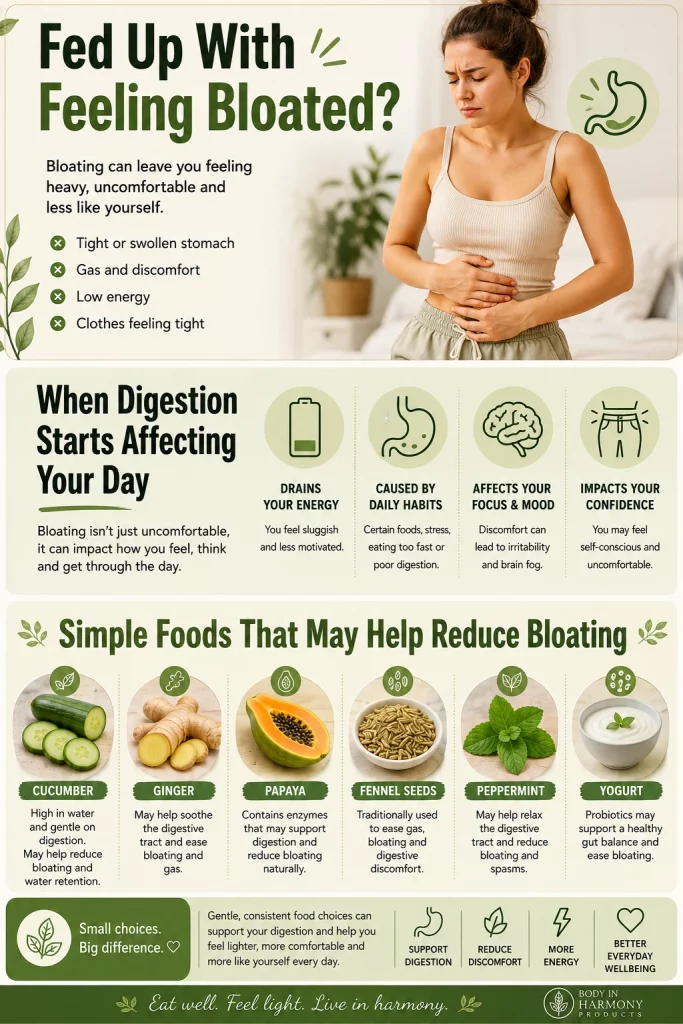
Toggle🌿 Foods That May Help Reduce Bloating Naturally
Foods that may help reduce bloating, after all bloating is more than just feeling a bit full after dinner.
It can leave the stomach tight, uncomfortable and heavy, and sometimes the real cause is not one particular food at all. Meal size, eating speed, fibre intake, gut bacteria, constipation, stress and certain fermentable carbohydrates can all play a part.
From a nutrition and herbal perspective, the best approach is to look at what is creating the bloating, then choose foods and herbs that fit that pattern.
💧 Hydration and Bloating
Good hydration matters, particularly when constipation or a high-fibre diet is part of the problem.
Water-rich foods include:
- Cucumber
- Watermelon
- Celery
- Lettuce
- Courgette
These foods can contribute to overall fluid intake, but cucumber is not a special treatment for water retention.
The bigger picture matters more.
Drink regularly through the day, keep fizzy drinks in check if they make you gassy, and watch very salty processed foods if they leave you feeling puffy.
🫚 Ginger for Sluggish Digestion
Ginger is one of the first herbs I would think about when bloating comes with a feeling of heaviness, slow digestion or food sitting around too long.
Ayurveda sees ginger as warming and stimulating to Agni, the digestive fire.
Modern research adds another layer. Gingerols and shogaols appear to influence gastrointestinal motility, and studies have shown ginger can speed gastric emptying in some situations.
That makes more sense than simply saying ginger “soothes the stomach”.
Try fresh ginger in:
- Hot water
- Soups
- Curries
- Stir-fries
- Lentil dishes
If bloating comes with burning reflux or strong Pitta-type heat, ginger may be too warming.
🌾 Fennel Seeds for Wind and Gas
Fennel is gentler.
Traditional herbalists and Ayurvedic practitioners have long used fennel when bloating feels more like trapped wind, fullness or abdominal discomfort.
Its aromatic compounds are why fennel has a long-standing reputation as a carminative herb — something traditionally used to help disperse gas.
Crush a small amount of fennel seed and steep it in hot water, or add it directly to cooking.
For a sensitive digestive system, fennel often makes more sense than reaching straight for strong chilli or large amounts of ginger.
🌿 Peppermint
Peppermint is another classic digestive herb.
Its main active compound, menthol, can influence smooth muscle in the gastrointestinal tract.
That is one reason peppermint oil has been studied for abdominal discomfort and bloating, particularly in people with irritable bowel symptoms.
Peppermint tea is much milder than concentrated peppermint oil, but it can still make a pleasant after-meal drink.
One thing to watch: peppermint may aggravate reflux in some people because it can relax the lower oesophageal sphincter.
Again, the right herb depends on the person.
Research into peppermint oil has found that it can reduce abdominal pain and other symptoms in people with irritable bowel syndrome, although peppermint tea is much less concentrated than the oils used in clinical studies.
Research on Peppermint Oil and Digestive Symptoms
🍌 Bananas, Oats and Gentle Fibre
Fibre can help bloating or make it worse.
That sounds contradictory, but it depends on the type, quantity and individual digestive system.
Oats contain soluble fibre, which absorbs water and can help support regular bowel movements.
Bananas also provide fibre and potassium.
But suddenly doubling your fibre intake is a good way to create even more gas.
Increase it gradually and drink enough fluid alongside it.
🥛 Yoghurt and Fermented Foods
Live yoghurt and other fermented foods can be useful for some people because they provide bacteria that interact with the gut microbiome.
That does not mean everyone with bloating needs probiotics.
Some people tolerate yoghurt brilliantly. Others find dairy makes things worse.
This is where a nutritionist’s approach becomes useful: look at patterns, not food trends.
If a food repeatedly leaves you bloated, it does not earn a place on your plate simply because somebody called it gut-friendly.
🍍 What About Papaya?
Papaya contains an enzyme called papain, which helps break down proteins.
That is why papaya is often promoted as a digestive food.
The idea is biologically plausible, but I would not oversell it.
Eating papaya as part of a balanced diet is one thing. Claiming it will fix bloating is another.
Use it because you enjoy it and it agrees with your digestion.
🍽️ How You Eat Matters Too
Sometimes the food gets blamed when the real problem is how it was eaten.
Common bloating triggers include:
- Eating too quickly
- Very large meals
- Fizzy drinks
- Constipation
- Suddenly increasing fibre
- Large amounts of beans or onions
- Sugar alcohols such as sorbitol
- Eating while highly stressed
Chewing properly and slowing meals down sounds basic, but it reduces the amount of air swallowed and gives the digestive process a better start.
Ayurveda has always placed importance on eating calmly and paying attention to appetite rather than eating mechanically because the clock says so.
🌿 Match the Food to the Type of Bloating
This is where Ayurveda adds something useful.
Not all bloating feels the same.
A Vata-type pattern may feel windy, dry, changeable and uncomfortable.
A Kapha-type pattern may feel heavy, slow and sluggish.
A Pitta-type digestive problem may involve more burning, heat or acidity than simple gas.
That changes what I would reach for.
Fennel and warm cooked foods may suit a windy Vata pattern.
Ginger or cumin may work better when digestion feels cold and sluggish.
Heavy chilli and strong ginger may be the wrong choice when heat and reflux are already present.
That is much more useful than treating every bloated stomach identically.
⚠️ Foods Worth Watching
Some common triggers include:
- Raw onions
- Large amounts of beans
- Cabbage and cauliflower
- Fizzy drinks
- Sugar-free sweets containing sorbitol
- Large fatty meals
- Excess alcohol
- Very large portions
These foods are not automatically unhealthy.
They simply contain ingredients or characteristics that can create more fermentation, gas or digestive pressure in susceptible people.
If you keep getting bloated, change one or two things at a time.
Cutting half the diet out overnight tells you nothing.
For more detail on common triggers, read our Foods That Cause Bloating guide.
🌱 Keep Bloating Support Simple
The most useful foods that may help reduce bloating are the ones that match what your digestion is actually doing.
That might mean more soluble fibre and water when constipation is involved.
It might mean ginger for slow, heavy digestion.
It might mean fennel when wind and gas are the main issue.
And sometimes it simply means smaller meals and less rushing.
For more on the herbal side of digestion, read our Spices That Help Digest Food from Body in Harmony Products.