
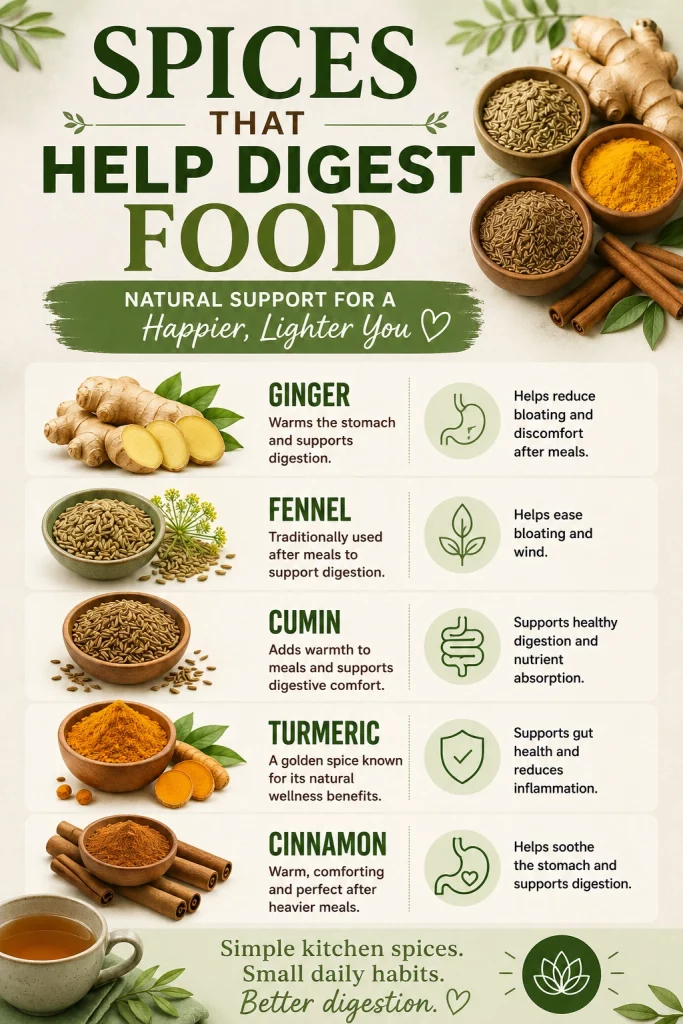
🌿 Spices That Help Digest Food: Everyday Support for Better Digestion
Spices that help digest food have been used for centuries because digestion is about more than simply what lands on your plate.
As an Ayurvedic herbalist and nutritionist, I look at both sides.
Modern nutrition looks at digestive enzymes, stomach emptying and gut motility. Ayurveda looks at Agni, the body’s digestive fire, and asks whether digestion feels strong, sluggish, cold, hot or irregular.
That is why certain spices that help digest foods can be useful additions to everyday meals.
🫚 Ginger
Ginger is one of the best-known digestive spices for good reason.
In Ayurveda, ginger is warming and stimulating. It is traditionally used to strengthen Agni and help when digestion feels cold, sluggish or heavy.
Modern research gives us another angle.
Ginger contains compounds including gingerols and shogaols, which appear to influence gastrointestinal motility.
In a small clinical study involving people with functional dyspepsia, ginger increased the speed of gastric emptying and stimulated contractions in the lower part of the stomach. Interestingly, it did not significantly improve their symptoms, which shows why we should not turn one mechanism into a miracle claim.
Use fresh ginger in:
- Tea
- Soups
- Curries
- Stir-fries
- Lentil dishes
Someone with burning reflux or already high Pitta may find strong ginger too heating, so more is not automatically better.
🌾 Fennel Seeds
Fennel is a much gentler digestive spice.
Ayurvedic herbalism commonly uses fennel when there is bloating, trapped wind or digestive discomfort without needing the strong heat of chilli or large amounts of ginger.
Its aromatic oils give fennel its distinctive smell and traditional carminative reputation — meaning it has long been used to help with gas and abdominal discomfort.
Fennel works particularly well after meals.
Try:
- Lightly crushing the seeds into food
- Steeping them in hot water
- Adding them to lentils or vegetable dishes
- Chewing a small amount after eating
For someone with a sensitive or Pitta-type digestive system, fennel can often make more sense than reaching straight for a fiery spice.
🌱 Cumin
Cumin is one of those spices I would happily use regularly rather than saving it for a particular complaint.
Ayurveda regards cumin as warming and supportive of Agni without being as aggressive as cayenne.
From a nutritional viewpoint, cumin contains aromatic compounds and plant polyphenols, while laboratory research has explored how cumin and other culinary spices interact with digestive enzymes.
That does not mean cumin is some sort of digestive enzyme supplement.
It does mean there is more going on than flavour alone.
Use cumin in:
- Lentils
- Chickpeas
- Rice
- Soups
- Roasted vegetables
- Curries
It pairs particularly well with coriander and fennel.
🌿 Coriander
Coriander is useful because it brings a different quality from stronger warming spices.
Ayurveda generally sees coriander as milder and more cooling, which makes it useful when digestion needs support without adding lots of heat.
Both the leaves and seeds can be used.
Coriander seeds work beautifully in curries, soups and rice dishes, while fresh coriander gives a lighter finish to meals.
I often like cumin and coriander together because you get warmth from one and a gentler balancing quality from the other.
✨ Turmeric
Turmeric is usually talked about for curcumin and inflammation, but in Ayurveda it has always had a much broader place.
It is pungent, bitter and warming, and traditionally used around digestion, metabolism and stagnation.
Modern studies have explored curcumin and other turmeric compounds for their effects on inflammatory signalling and metabolic health.
However, turmeric is not something I would sell as a stand-alone digestive cure.
Its strength is that it slips easily into everyday food.
Use it in:
- Curries
- Lentils
- Rice
- Soups
- Egg dishes
- Vegetable stews
A little black pepper and fat in the meal can also influence the absorption of curcumin.
🍂 Cinnamon
Cinnamon brings warmth without the fierce heat of cayenne.
Ayurveda traditionally uses warming spices when digestion feels cold or sluggish, and cinnamon fits that role nicely.
Modern clinical research on cinnamon has focused more heavily on blood glucose and metabolic health than digestion itself. A recent review of culinary herbs and spices found cinnamon, ginger and several others among the most studied spices at normal food-level doses.
For digestion, I would use cinnamon more as part of the overall meal than pretend it directly fixes bloating.
It works well in:
- Porridge
- Stewed fruit
- Yoghurt
- Rice dishes
- Warm drinks
🔥 Match the Spice to the Digestion
This is where Ayurveda adds something that ordinary spice lists often miss.
Not everyone needs more heat.
Someone who feels cold, heavy and sluggish after meals may respond well to ginger, cumin or cinnamon.
Someone already dealing with burning reflux, excessive heat or Pitta-type irritation may be better suited to gentler spices such as fennel or coriander.
That is why, as an Ayurvedic herbalist, I would never simply say:
“Ginger is good for digestion, so everybody should drink ginger tea.”
The right spice depends on the person and what their digestion is actually doing.
🍽️ Eating Habits Still Matter
Even the best spices that help digest food cannot rescue every bad eating habit.
As a nutritionist, I would still look at:
- Portion size
- How quickly you eat
- Fibre intake
- Fluid intake
- Meal timing
- How much processed food you eat
- Whether you are actually hungry before meals
Ayurveda adds another simple rule: give digestion a chance to finish one job before handing it another.
Constant grazing, overeating and eating while stressed can all leave digestion feeling heavy.
Spices can support the process.
They should not have to fight against everything else you are doing.
🍵 A Simple Digestive Tea
For something gentle after a meal, try:
- ½ teaspoon fennel seeds
- ½ teaspoon coriander seeds
- A small pinch of cumin
Lightly crush the seeds, add hot water and steep for around ten minutes.
This is far gentler than throwing cayenne, ginger, turmeric and half the spice cupboard into one mug and calling it a detox tea.
For more on herbal digestive support, read our Natural Remedies for Digestion from Body in Harmony Products.