
🫐 Blueberry Tea: A Refreshing Boost for Kidney Health
Blueberry tea benefits for kidney health mainly come from two sensible areas: keeping hydrated and providing plant compounds such as polyphenols, depending on how the infusion is made.
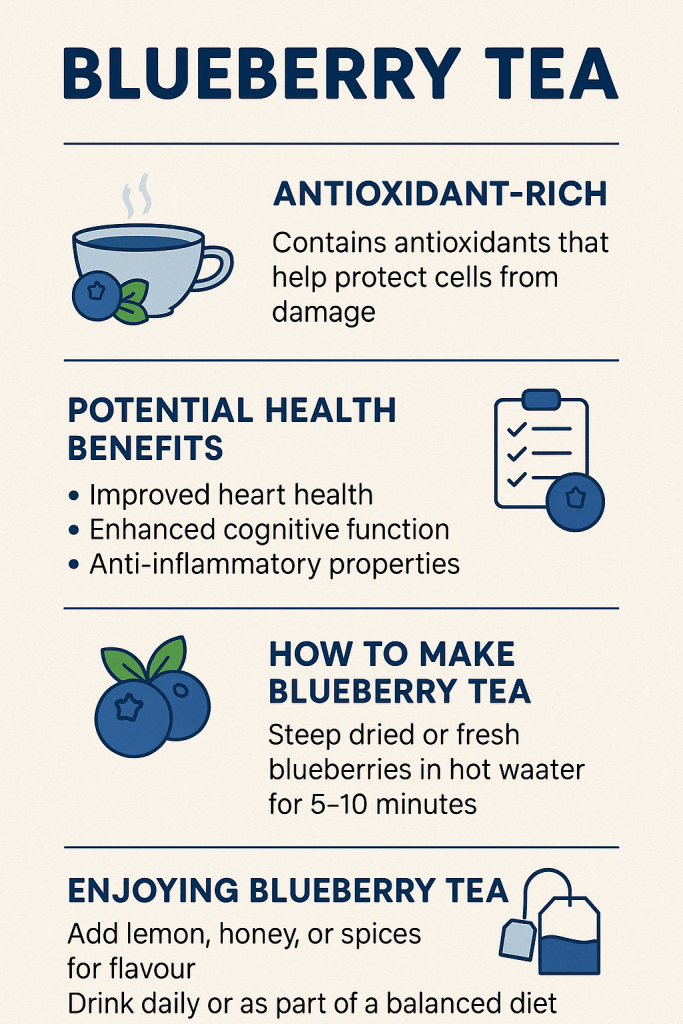
Blueberries themselves are rich in anthocyanins, the pigments responsible for their deep blue colour. Research links these compounds with antioxidant and anti-inflammatory activity, although evidence on blueberry tea specifically is much more limited.
As a qualified Diet and Nutritional Advisor, I would look at blueberry tea as a useful drink within a healthy diet rather than something that “cleans” or repairs the kidneys.
🫐 Why Blueberries Are Interesting for Kidney Health
The kidneys continuously filter the blood while regulating fluid, minerals and waste products.
Oxidative stress can damage cells when reactive molecules overwhelm the body’s antioxidant defences. Anthocyanins and other blueberry polyphenols have been studied because they may help reduce this oxidative burden.
A review published on PubMed Central examined research into blueberries and their anthocyanins, including effects on inflammation, blood vessels and metabolic health.
That supports the nutritional value of blueberries.
However, most of this research involves whole berries, juices, powders or concentrated extracts rather than a cup of blueberry infusion.
🍵 What Is Blueberry Tea?
Blueberry tea may contain:
- dried blueberries
- blueberry leaves
- fruit pieces
- other herbs such as hibiscus
This matters because they are not nutritionally identical.
A tea containing dried fruit may extract some water-soluble plant compounds, but it will not provide everything you would get from eating whole blueberries.
Blueberry-leaf tea is different again and should not simply be assumed to have the same benefits as the fruit.
💧 A Simple Way to Support Hydration
One genuine advantage of a blueberry infusion is that it can make drinking more fluid enjoyable.
Adequate hydration helps the kidneys perform their normal job of filtering blood and producing urine.
An unsweetened fruity infusion can therefore be a useful alternative to sugary drinks.
That is a much more realistic kidney-health benefit than claiming the tea “flushes toxins” from the organs.
❤️ Anthocyanins and Circulation
Blueberry anthocyanins have also attracted attention for their effects on blood vessels.
Research suggests regular blueberry consumption may influence endothelial function — the ability of the inner lining of blood vessels to expand and respond normally.
Healthy circulation matters throughout the body, including the kidneys.
Again, the strongest evidence relates to blueberries and concentrated berry preparations rather than ordinary blueberry tea, so I would not claim that a daily cup lowers blood pressure.
🫖 How to Make Blueberry Tea
A simple fruit infusion is enough.
Ingredients
- 1 tablespoon dried blueberries
- 250ml hot water
- fresh mint or lemon if wanted
Method
- Place the dried blueberries into a cup or teapot.
- Add hot water.
- Leave for around 5–10 minutes.
- Strain and drink warm or chilled.
If using blueberry leaves, choose a properly identified food-grade herbal product rather than gathering leaves without knowing the species or preparation.
⚠️ What If You Have Kidney Disease?
Blueberry tea is not a treatment for kidney disease.
People with chronic kidney disease may have individual restrictions involving fluids, potassium, medicines or other nutrients depending on their kidney function.
That makes their situation quite different from someone simply drinking an unsweetened fruit infusion as part of an ordinary healthy diet.
✅ The Bottom Line
Blueberry tea can be a pleasant, naturally caffeine-free way to increase fluid intake while enjoying some of the plant compounds associated with berries.
Research into blueberries and anthocyanins shows interesting antioxidant, anti-inflammatory and cardiovascular effects.
What we cannot yet say is that blueberry tea itself improves kidney filtration, detoxifies the kidneys or prevents kidney disease.
For everyday use, I would enjoy it for what it is: a simple fruit infusion that can form part of a varied diet and good hydration routine.
If you enjoy building simple habits around herbal drinks and everyday wellbeing, our guide to Daily Rituals: Simple Habits for Balance and Calm fits naturally alongside this one.