
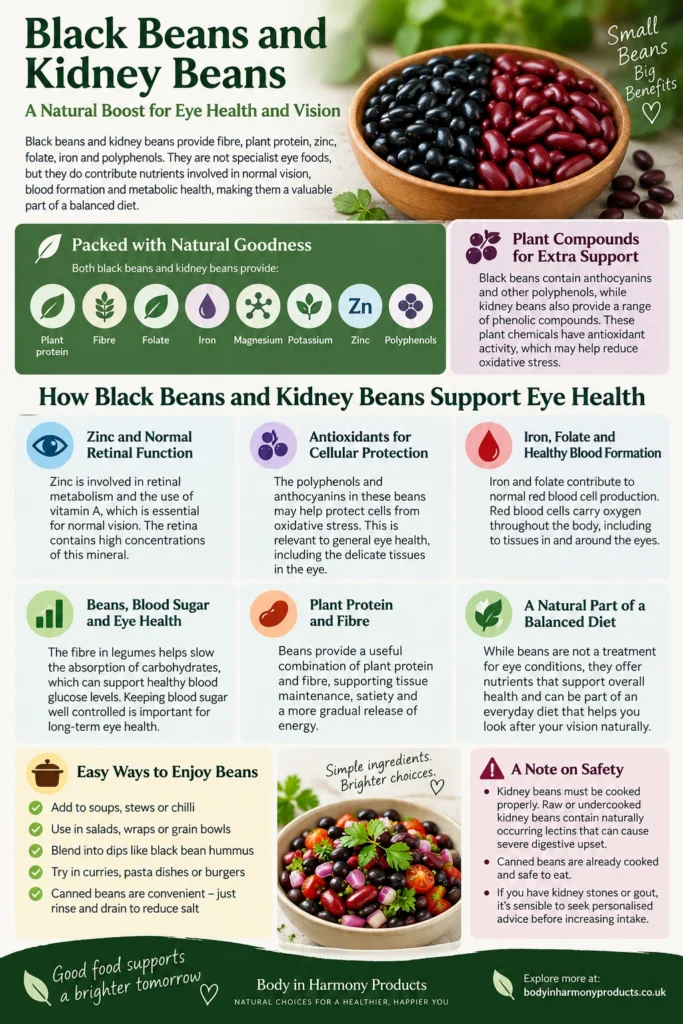
👁️ Black Beans and Kidney Beans: A Natural Boost for Eye Health and Vision
Black beans and kidney beans for eye health are worth looking at because they provide fibre, plant protein, zinc, folate, iron and polyphenols.
They are not specialist “eye foods” in the way some articles suggest, but they do contribute nutrients involved in normal retinal function, blood formation and metabolic health.
From a nutrition point of view, that makes these everyday legumes a useful part of a wider diet that supports healthy vision.
🫘 What Makes Black Beans and Kidney Beans Nutritious?
Both beans provide:
- plant protein
- dietary fibre
- folate
- iron
- magnesium
- potassium
- zinc
- polyphenols
Black beans are particularly interesting because their dark seed coat contains anthocyanins and other phenolic compounds.
A recent review of legumes describes how these plant compounds may influence oxidative stress and inflammatory pathways.
👁️ Zinc and Normal Retinal Function
Zinc plays an important role in the eye.
It is involved in retinal metabolism and in the movement and use of vitamin A, which is essential for normal vision.
Research into zinc biology shows that the retina contains particularly high concentrations of this mineral and relies on tightly controlled zinc metabolism.
Beans can contribute some dietary zinc, although they should not be presented as preventing age-related eye disease on their own.
🫐 Polyphenols and Antioxidant Protection
Black beans contain anthocyanins and other polyphenols, while kidney beans also provide a range of phenolic compounds.
These plant chemicals have antioxidant activity and may help reduce oxidative stress.
That is relevant to general cellular health, including tissues in the eye, but it is too strong to say beans directly prevent retinal damage or keep eyesight sharper.
🩸 Iron, Folate and Healthy Blood Formation
Iron and folate both contribute to normal blood-cell production.
Red blood cells carry oxygen throughout the body, including to tissues in and around the eyes.
This makes legumes useful nutritionally, but it does not mean eating beans directly improves circulation to the retina.
The better claim is that they contribute nutrients needed for normal blood formation.
🍽️ Beans, Blood Sugar and Eye Health
This is where the wider metabolic benefits become relevant.
Black beans, kidney beans and other pulses contain plenty of fibre and generally have a lower glycaemic impact than highly refined carbohydrate foods.
A systematic review of randomised controlled trials found that regular legume consumption may improve some measures of glycaemic control in people with type 2 diabetes, although the overall quality of evidence was rated very low.
Read the research on legumes and blood sugar control
Keeping blood glucose well controlled matters because persistently high glucose can damage small blood vessels throughout the body, including those in the retina.
That does not make beans a treatment for diabetic eye disease, but it does make them a sensible part of a balanced eating pattern.
🌿 Plant Protein and Fibre
Beans are also useful because they combine protein with fibre.
Protein provides amino acids needed for tissue maintenance and repair, while fibre supports bowel health, satiety and more gradual carbohydrate absorption.
That combination makes legumes particularly useful when replacing some highly refined foods or processed meats.
🍲 Easy Ways to Eat More Beans
Black beans and kidney beans work well in:
- soups
- stews
- chilli
- salads
- wraps
- grain bowls
- bean dips
- curries
Canned beans are perfectly practical.
Just drain and rinse them if you want to reduce some of the added salt.
⚠️ Kidney Beans Must Be Cooked Properly
Raw and undercooked red kidney beans contain high levels of phytohaemagglutinin, a naturally occurring lectin that can cause severe nausea, vomiting and diarrhoea.
Canned kidney beans have already been properly cooked.
If preparing dried kidney beans, soak and cook them thoroughly according to proper food-safety instructions.
✅ Beans and Vision: The Bottom Line
Black beans and kidney beans provide several nutrients relevant to normal eye and metabolic health, including zinc, folate, iron, fibre and polyphenols.
Their strongest case is not that they “protect eyesight” directly.
It is that they are nutrient-dense legumes that can contribute to healthy blood formation, glucose control and antioxidant intake as part of a varied diet.
For more ways to use pulses, see our guide to 20 Examples of Legumes to Fuel Your Health Naturally.