
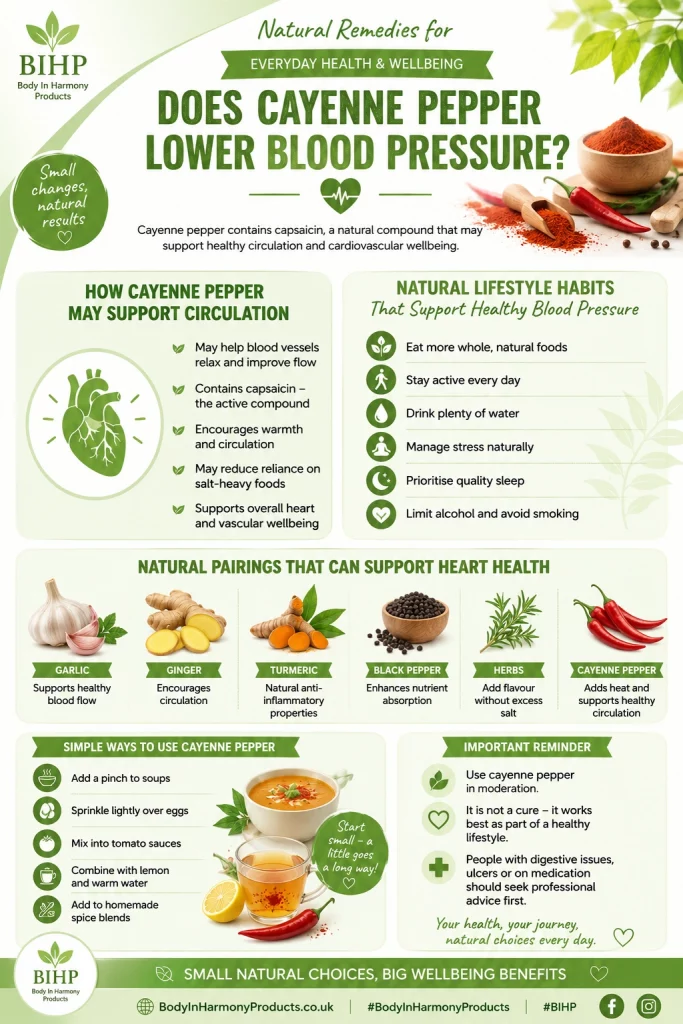
🌶️ Does Cayenne Pepper Lower Blood Pressure Naturally?
So, does cayenne pepper lower blood pressure?
There is a genuine reason this fiery spice attracts attention.
Cayenne contains capsaicin, the compound responsible for its heat. Research has explored capsaicin for its effects on blood vessels, circulation and a receptor called TRPV1, which plays a part in vascular function and blood-pressure regulation.
As an Ayurvedic herbalist and nutritionist, I find cayenne particularly interesting because the traditional and modern viewpoints overlap in several places.
Ayurveda has long regarded pungent spices as warming, stimulating and moving. Modern research is now exploring how capsaicin influences circulation and blood-vessel behaviour.
That does not make cayenne a treatment for hypertension, but it certainly makes it more than something that simply sets your mouth on fire.
❤️ How Cayenne May Affect Blood Vessels
Capsaicin activates TRPV1 receptors found in sensory nerves and other tissues, including parts of the cardiovascular system.
Research suggests this activation can influence substances involved in blood-vessel relaxation, including nitric oxide and calcitonin gene-related peptide.
In simple terms, those mechanisms may help blood vessels relax and influence how easily blood moves through them.
A scientific review of capsaicin and blood-pressure regulation found promising evidence from animal studies, population research and some human studies. However, the authors also noted that results from clinical trials are mixed.
Research on Capsaicin and Blood Pressure Regulation
So the answer to does cayenne pepper lower blood pressure is not a straightforward yes or no.
There are believable biological mechanisms and encouraging research, but we do not yet have strong enough human evidence to claim that sprinkling cayenne over dinner will reliably lower somebody’s blood pressure.
🌿 The Ayurvedic View of Cayenne and Circulation
From an Ayurvedic herbalist’s point of view, cayenne is a strongly pungent, heating and stimulating spice.
It fires up Agni, encourages warmth and helps move cold, sluggish qualities.
That makes cayenne particularly interesting where somebody tends towards coldness, heaviness or sluggish circulation.
But Ayurveda is never simply about saying, “This herb is good, therefore everybody should take it.”
Cayenne can strongly increase Pitta.
Someone who already runs hot, experiences burning digestion, reflux or other heat-related symptoms may find that large amounts make matters worse.
That is why constitution and current balance matter.
A warming spice that suits one person beautifully may be far too aggressive for somebody else.
🧂 Cayenne Can Also Help You Use Less Salt
There is another much simpler benefit that often gets overlooked.
Strong herbs and spices make food taste better.
If cayenne, garlic, cumin, turmeric, coriander and other spices help you rely less on heavily salted sauces and processed foods, that can be useful when looking after blood pressure.
The benefit there is not magical.
You are simply replacing some of the salt-heavy flavouring with herbs and spices that bring their own plant compounds and plenty of flavour.
Try cayenne in:
- Soups and stews
- Eggs
- Beans and lentils
- Tomato sauces
- Curries
- Roasted vegetables
- Homemade spice blends
You only need a pinch.
Cayenne is one ingredient where proving how tough you are achieves absolutely nothing.
🔥 Start Small With Cayenne
More cayenne does not mean more benefit.
Large amounts can irritate the mouth and digestive tract, and very high chilli intake has even been associated with unusual cases of acute blood-pressure increases.
Start with small culinary amounts and see how your body responds.
From an Ayurvedic perspective, signs that you may be overdoing it include excessive heat, burning digestion or increased Pitta-type irritation.
If you already have troublesome reflux or a very sensitive digestive system, cayenne may simply not be the right spice for you.
💪 Blood Pressure Is Bigger Than One Spice
As a nutritionist, I would never look at cayenne in isolation.
Blood pressure is influenced by the wider pattern of what you eat and how you live.
That means looking at:
- Whole foods rather than heavily processed meals
- Plenty of vegetables and fruit
- Potassium-rich foods
- Sensible salt intake
- Regular movement
- Healthy body composition
- Quality sleep
- Alcohol intake
- Smoking
- Stress
Ayurveda adds another useful layer by asking about digestion, constitution, daily routine and whether the person is showing too much heat, coldness, dryness, heaviness or stimulation.
That is a much more useful approach than hunting for one miracle ingredient.
🌶️ So, Does Cayenne Pepper Lower Blood Pressure?
Cayenne has real potential, particularly because capsaicin interacts with pathways involved in blood-vessel function and circulation.
Traditional herbalism and Ayurveda also give cayenne a longstanding reputation as a warming, stimulating spice that gets things moving.
But I would use it as part of the diet, not treat it like a natural blood-pressure tablet.
Add a sensible pinch to proper food, pay attention to how your digestion responds, and look at the whole lifestyle rather than expecting one spice to do all the work.
If you already take medication for blood pressure, do not replace or alter it simply because you have started using cayenne.
For more about using food as part of a wider approach to health, read our Food for Wellbeing – Natural Choices for Everyday Balance from Body in Harmony Products.