
🌿 Herbs and Spices for Longevity
Herbs and spices for longevity have been used across traditional food and herbal practices for generations. Today, modern research is helping us understand how many of their naturally occurring compounds interact with the body.
Herbs and spices contain polyphenols, terpenes, volatile oils and other phytochemicals. These compounds have been studied for their effects on oxidative stress, inflammatory signalling, glucose metabolism and cardiovascular health.
This guide looks at how familiar kitchen ingredients can form part of a practical, food-based approach to long-term health without turning everyday herbs into miracle remedies.
🍃 Herbs and Spices for Longevity in Everyday Life
One of their biggest advantages is simplicity. Many useful herbs and spices are probably already in your kitchen.
Turmeric provides curcuminoids, including curcumin, while ginger contains gingerols and shogaols. Garlic produces sulphur-containing compounds such as allicin when the cloves are crushed, and cinnamon contains several polyphenolic compounds that have been investigated for their effects on glucose metabolism.
The evidence is not identical for every herb or every claimed benefit. A 2023 review examined 142 clinical studies involving culinary doses of common herbs and spices. Cinnamon, fenugreek and ginger had some of the strongest bodies of research for glycaemic control, while cardamom showed potential effects on inflammatory markers and cinnamon, ginger and turmeric showed evidence relating to blood lipids. The researchers also identified significant gaps where further clinical research is needed.
Read the clinical review on herbs and spices at PMC/NCBI
🌱 Some of the Best-Studied Herbs and Spices
Turmeric has a long history within Ayurveda and contains curcumin and related curcuminoids. Modern research has investigated these compounds particularly in relation to inflammatory pathways and oxidative stress.
Ginger is traditionally associated with digestion and warming the body. Its gingerols and shogaols have also been investigated for metabolic and anti-inflammatory effects.
Cinnamon has attracted considerable research around blood glucose and insulin sensitivity. If I were using cinnamon regularly, I would favour Ceylon cinnamon (Cinnamomum verum) because it generally contains much less coumarin than Cassia cinnamon.
Garlic contains organosulfur compounds and has been studied for potential effects on cardiovascular risk factors.
Rosemary, thyme and oregano also provide aromatic plant compounds and polyphenols while adding flavour to meals without relying heavily on salt.
🌿 How Herbs and Spices Interact with the Body
Different plants act through different compounds, so it is misleading to treat all herbs and spices as though they work in the same way.
Polyphenols can interact with cellular signalling and antioxidant defence systems. Sulphur compounds in garlic have different biological actions, while compounds such as gingerols, curcumin and piperine have their own mechanisms and patterns of absorption.
Importantly, promising laboratory mechanisms do not automatically translate into a meaningful effect in humans.
A review of human clinical trials found evidence that certain herbs and spices may influence blood lipids, glucose control, blood pressure, inflammation and oxidative stress, but the researchers also highlighted considerable differences between studies and the need for better controlled trials.
That is why I prefer to look at traditional knowledge, biological mechanisms and human evidence together, rather than relying on any one of them in isolation.
🍵 Simple Ways to Use Herbs and Spices
You don’t need complicated preparations. Culinary use is one of the easiest ways to bring a wider range of plant compounds into the diet.
- Add turmeric and black pepper to curries, soups, eggs or rice.
- Use fresh ginger in stir-fries, teas and warming dishes.
- Sprinkle Ceylon cinnamon over porridge, yoghurt or stewed fruit.
- Cook regularly with garlic, rosemary, thyme and oregano.
- Experiment with coriander, cardamom, cumin and fenugreek rather than relying on the same few spices.
Culinary amounts are also quite different from concentrated extracts, essential oils and high-dose supplements. More concentrated does not automatically mean more beneficial.
🌍 Herbs, Spices and Long-Term Wellbeing
Herbs and spices are not quick fixes. Their real value is in becoming part of a varied diet built around good-quality whole foods.
There is some interesting human evidence here. In one randomised controlled-feeding study involving 71 adults at elevated cardiometabolic risk, diets containing different amounts of mixed culinary herbs and spices were compared for four weeks. The higher-spice diet produced modest improvements in 24-hour blood pressure, although it did not improve every cardiovascular or metabolic marker measured.
That is a good example of why the evidence needs to be presented properly. Herbs and spices may contribute something useful to the diet, but they do not need exaggerated claims to make them worthwhile.
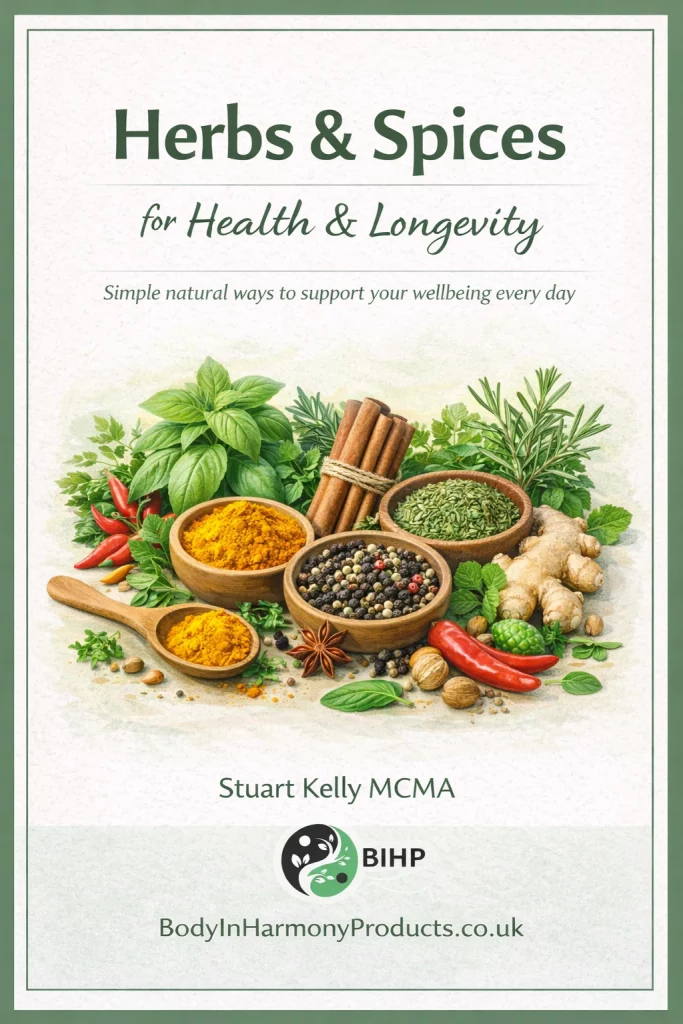
📥 Download the Herbs and Spices for Health & Longevity Guide
If you want to explore the subject further, my free Herbs & Spices for Health & Longevity eBook brings together 20 familiar herbs and spices, their traditional uses, key plant compounds and practical ways to use them.
Download your free guide below and start with the herbs and spices you already have in your kitchen.