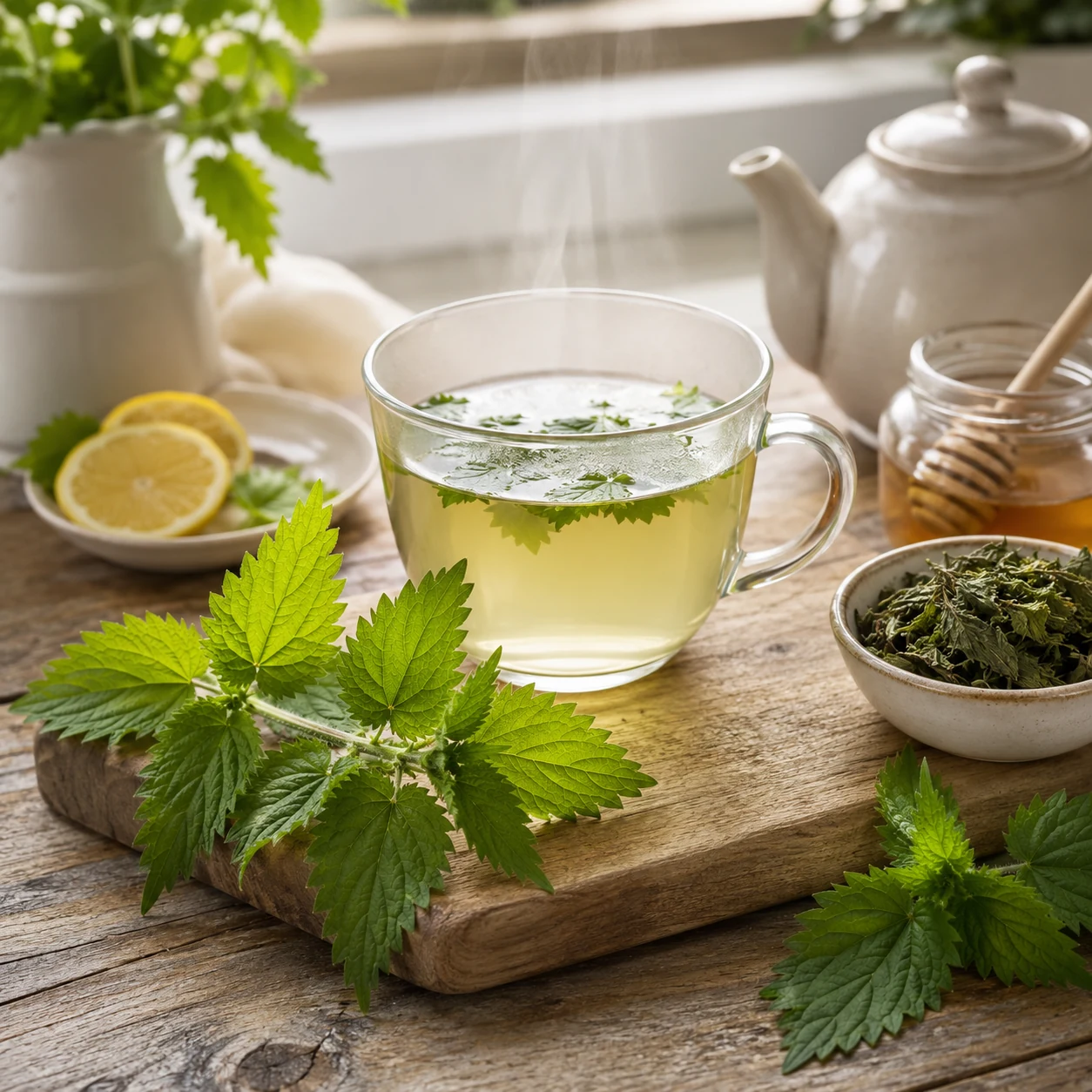
Stinging nettle tea health benefits are often linked with inflammation support, urinary health, and blood sugar balance, although research is still developing and results can vary.
Steeping dried leaves to make tea is a tradition that dates back thousands of years. Originating in China, tea was initially used for medicinal purposes. Today, people drink tea for various reasons, including its taste, ability to stimulate or calm, and health benefits. One popular herbal option is nettle tea.
What is Nettle?
Nettle, or stinging nettle, is a shrub native to northern Europe and Asia. Its scientific name is Urtica dioica. The plant has attractive, heart-shaped leaves and yellow or pink flowers, but its stems are covered in tiny, stiff hairs that release stinging chemicals upon contact.
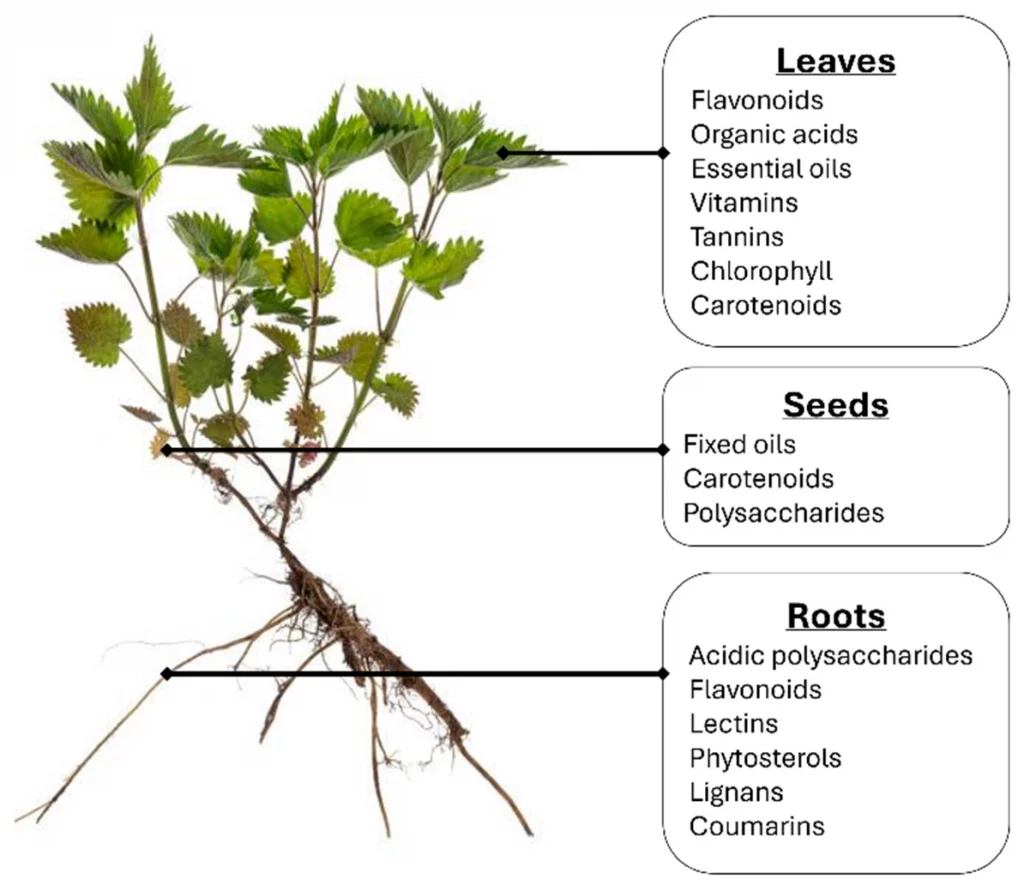
The leaf stems and roots of the nettle plant can be crushed and processed into powders, tinctures, creams, teas, and other forms. While nettle has been used as an herbal remedy for centuries, modern research continues to explore several of its potential health benefits.
stinging nettle tea for urinary tract health
Stinging nettle tea is traditionally used to support urinary health, partly because herbal teas can contribute to daily fluid intake. Nettle has also been studied in relation to benign prostatic hyperplasia, often shortened to BPH, which is an enlarged prostate gland in men that can lead to discomfort or difficulty urinating.
Some research has explored nettle extract for urinary symptoms linked with BPH, although this usually involves concentrated extracts rather than a simple cup of nettle tea. Nettle should not be used as a replacement for prescribed medication or medical advice. If you have urinary symptoms, take medication, or have an existing health condition, speak with a healthcare professional before using nettle products regularly.
Arthritis and Pain Relief
Some sources discuss nettle in relation to inflammation and joint comfort, although more research is needed before strong conclusions can be made.
Blood Sugar Management
Nettle has been studied for its possible role in blood glucose support. Some research has explored whether compounds in nettle may influence insulin activity and help support blood sugar balance.
One 2013 study looked at nettle leaf extract in people with type 2 diabetes who were already using insulin and oral diabetes medication. The results were interesting, although this was based on nettle extract rather than nettle tea itself.
Studies continue to explore Urtica dioica, commonly known as stinging nettle, including its traditional use and potential effects on metabolic health.
The Power of Polyphenols
Nettle is rich in plant compounds called polyphenols, which are one reason this plant continues to attract interest in natural health research. Polyphenols are known for their antioxidant activity and their role in supporting the body against oxidative stress and inflammation.
Research has also explored polyphenols extracted from nettle for their potential activity against breast and prostate cancer cells. This makes nettle an interesting plant from a natural health perspective, especially when looking at how traditional herbs may contain compounds with wider biological activity.
This does not mean nettle tea should be viewed as a cancer treatment, but it does show why plants such as nettle deserve proper attention. Alongside its traditional use as a herbal tea, nettle offers a range of plant compounds that may support overall health and cellular protection.
How to Make Stinging Nettle Tea
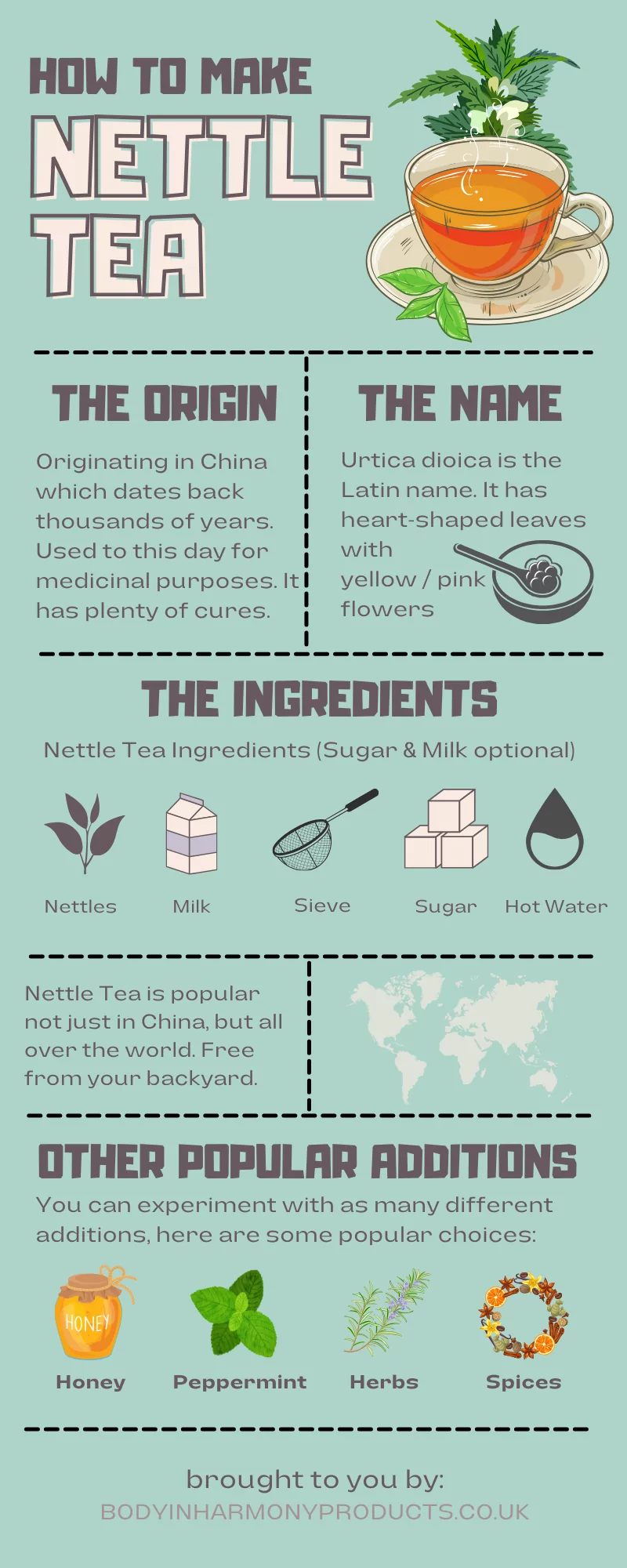
You can purchase nettle tea as loose leaves or in tea bags. Alternatively, you can grow or harvest the leaves yourself. When using fresh leaves, experiment with the ratio of nettle to water, but a general guideline is two cups of water for every cup of leaves. Here’s how to prepare it:
- Add water to the leaves.
- Bring the water to a gentle boil.
- Turn off the heat and allow the mixture to steep for five minutes.
- Strain the liquid through a fine sieve.
- Add honey, cinnamon, or stevia if desired.
Begin with one cup of nettle tea to ensure you do not experience any adverse reactions.
Warnings
Stinging nettle tea is generally considered safe for many people when prepared properly, but it may not suit everyone. Some people can react to herbs, especially if they have allergies, existing health conditions, or take regular medication.
Fresh nettle leaves should also be handled with care because the tiny hairs on the plant can irritate the skin. Dried nettle tea is very different from touching the fresh plant, but it is still sensible to start with a small amount and see how your body responds.
Conclusion
Part of the appeal of nettle tea is the simple ritual of making it. Boiling the water, allowing the leaves to steep, and taking a quiet moment with a warm herbal drink can become a gentle habit in itself.
Stinging nettle has a long history of traditional use, and modern research continues to explore its plant compounds, nutrients, and potential health benefits. While it should not be seen as a cure-all, it remains a valuable herbal tea for those interested in natural wellbeing and everyday plant-based support.
Herbal teas like stinging nettle can fit well into a balanced lifestyle built around simple daily choices. If you want to understand how supportive plant-based drinks connect with wider wellbeing habits, our holistic wellbeing content explores practical ways to support balance, awareness, and everyday health.