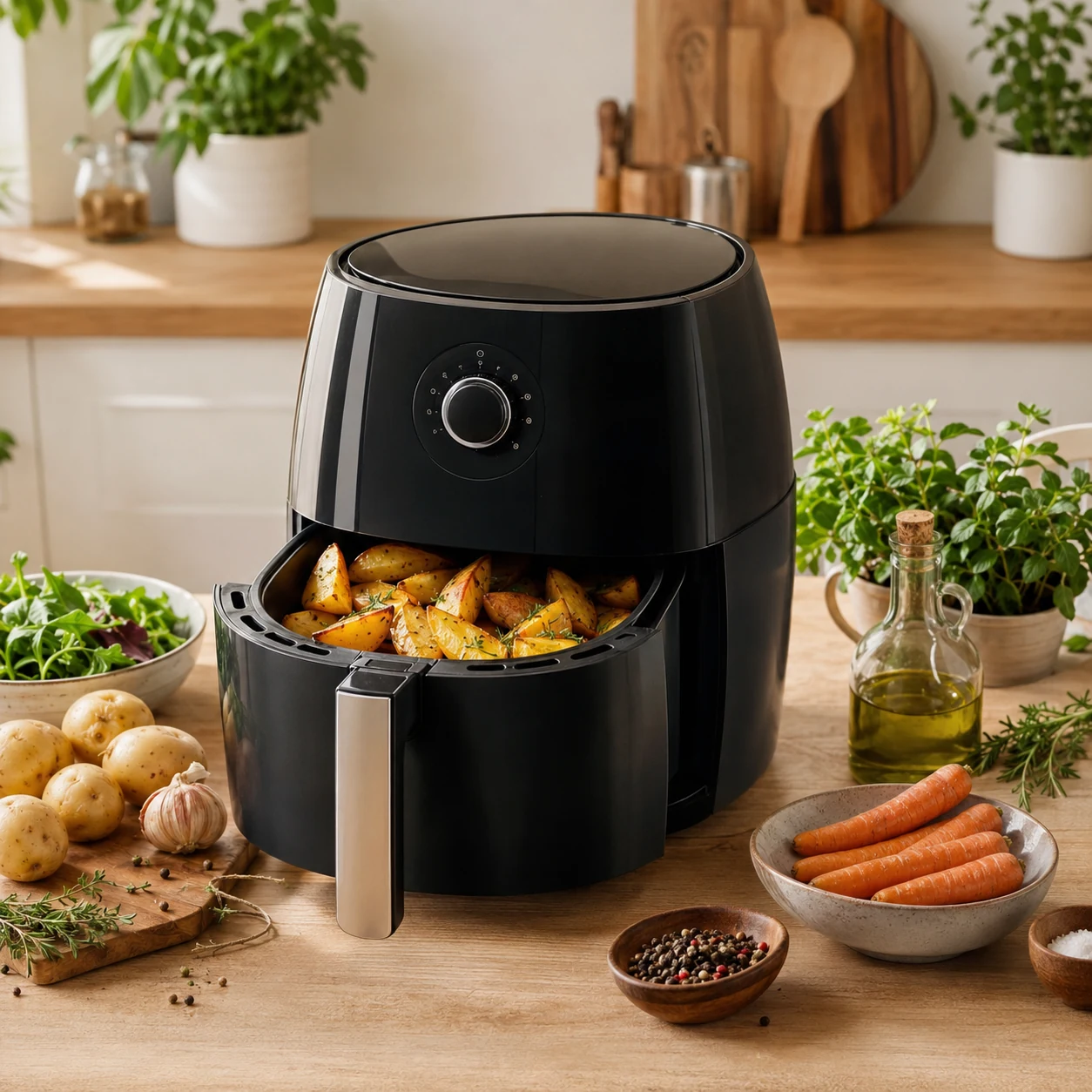
Hazards of cooking with an air fryer are worth understanding, especially as these appliances have become a regular part of modern kitchens. Air fryers are popular because they cook food quickly, create a crisp texture, and usually need far less oil than deep frying.
However, like any cooking method, air frying comes with a few points to be aware of. Most concerns are linked to high heat, overcooking, poor ventilation, damaged coatings, low-quality materials, or incorrect use.
This does not mean air fryers should be avoided. Instead, it means they should be used with care and balance. By understanding the possible risks, you can enjoy the convenience of air frying while making safer and healthier choices in everyday cooking.
🍳 Hazards of Cooking with an Air Fryer: The Main Things to Know
The hazards of cooking with an air fryer usually come from how the appliance is used rather than the appliance itself. Air fryers work by circulating very hot air around food, often at temperatures between 150°C and 200°C.
This high heat helps create a crisp finish, but it also means care is needed. Overfilled baskets, blocked vents, damaged surfaces, poor cleaning, and overcooked food can all create avoidable problems.
Used correctly, an air fryer can be a helpful kitchen tool. The key is to treat it like any other high-heat appliance and follow simple safety habits.
🔥 hazards of cooking with an air fryer-Fire Hazards and Overheating
Air fryers need space around them to release heat safely. If the vents are blocked, or the appliance is placed too close to walls, cupboards, paper, tea towels, or other heat-sensitive items, heat can build up.
Overfilling the basket can also affect airflow. When hot air cannot move properly around the food, the appliance may work harder, cook unevenly, or become hotter than intended.
Electrical safety also matters. Damaged cables, poor-quality plugs, overloaded sockets, or faulty wiring can increase the risk of problems.
To reduce risk, place the air fryer on a stable, heat-resistant surface. Leave space around the appliance, avoid overfilling the basket, and always follow the manufacturer’s instructions.
❤️ Air Fryer Health Concerns
Air fryers are often promoted as a healthier alternative to deep frying because they usually require less oil. This can be helpful, especially for people trying to reduce fried foods or heavy cooking fats.
However, air frying is still a high-heat cooking method. When starchy foods such as potatoes, chips, or breaded foods are cooked until very dark or burnt, compounds such as acrylamide can form. Acrylamide is linked with high-temperature cooking, especially when foods are browned heavily.
Research has also looked at compounds such as benzo[a]pyrene in air-fried and oven-cooked food. This supports the importance of cooking temperature, food type, and avoiding burnt food when using high-heat cooking methods.
Overcooking or burning meat and protein-rich foods can also create unwanted compounds, as happens with grilling, frying, roasting, and barbecuing.
This does not mean you need to stop using an air fryer. A balanced approach is better. Avoid burning food, cook until golden rather than dark brown, and include a variety of cooking methods such as steaming, boiling, slow cooking, and gentle roasting.
🛡️ Non-Stick Coatings and Build Quality
Another point to consider is the quality of the air fryer itself. Many air fryers use non-stick coatings, plastics, metals, and removable trays or baskets. These materials vary depending on the brand and model.
Low-quality coatings may wear down over time, especially if scratched with metal utensils or cleaned with harsh materials. Once a coating becomes badly damaged, it is sensible to replace the basket or appliance, depending on the model.
Some non-stick coatings can release fumes if overheated beyond safe temperatures. This is another reason to avoid running an empty air fryer for long periods or using temperatures higher than recommended.
Choose a reputable brand where possible, check the basket regularly, and use wooden, silicone, or plastic utensils designed for non-stick surfaces. Clean gently with non-abrasive materials to help protect the coating.
🧽 Burns, Cleaning and Everyday Safety
Air fryers become very hot during use. The basket, tray, drawer, internal parts, and surrounding surfaces can all cause burns if handled without care.
Steam can also escape when the drawer is opened, especially when cooking foods with moisture or fat. Fatty foods may spit or leave grease behind, which can build up if the appliance is not cleaned properly.
Grease, crumbs, and food debris can become a fire risk over time. They can also affect the smell and taste of future meals.
Use oven gloves when handling hot parts, open the basket carefully, and let the appliance cool before cleaning. Wipe away grease and remove food debris after each use. This simple habit keeps the appliance safer and more pleasant to use.
♻️ Environmental Concerns
Air fryers are often smaller and quicker than conventional ovens, so they can be efficient for small meals. However, like all electrical appliances, they still use energy and eventually create waste.
Some cheaper models may have a short lifespan, especially if parts are hard to replace. This can add to electronic waste when appliances are thrown away rather than repaired.
If you use an air fryer regularly, it is worth choosing a durable model with replaceable parts where possible. Looking after the basket, avoiding damage, and cleaning it properly can also extend its life.
When replacing an appliance, recycle it responsibly through local electrical recycling schemes.
🌬️ Noise, Odours and Kitchen Ventilation
Some air fryers are noisier than others because they use a fan to circulate hot air. This is usually not a safety concern, but it can be irritating in smaller kitchens.
Cooking fatty, spicy, or strongly scented foods can also create odours. Poor ventilation can make smells linger, especially if the appliance is not cleaned often.
To reduce this, use the air fryer in a well-ventilated space, clean it regularly, and avoid letting grease build up. If noise is a concern, check reviews before buying a new model, as some are much quieter than others.
✅ Conclusion
The hazards of cooking with an air fryer are mainly linked to high heat, poor airflow, overcooking, damaged coatings, lack of cleaning, and unsafe handling. These risks are real, but they are also manageable with sensible use.
Air fryers can still be a useful tool for everyday cooking, especially when they help reduce excess oil and make home cooking easier. The healthiest approach is not to rely on one cooking method all the time, but to use a variety of methods that support balance.
Cook food until golden rather than burnt, keep the appliance clean, protect the non-stick coating, allow proper ventilation, and follow the manufacturer’s safety advice.
Understanding everyday cooking methods is part of building a more balanced relationship with food. If you are interested in a wider view of how daily habits support long-term wellbeing, you may also find our holistic wellbeing approach helpful, as it explores simple and practical ways to support balance in everyday life.
Understanding the hazards of cooking with an air fryer is part of building better everyday food awareness. For a wider look at how daily food choices support balance, you may also find our guide to food for wellbeing helpful.