Modified Corn Starch: What It Really Is and Why It’s in So Many Foods
Modified corn starch sounds harmless, right? It’s in so many products, from sauces and sweets to baked goods and ready meals. But what actually is it — and should you care? Let’s get into the facts.
🌽 What Is Modified Corn Starch?
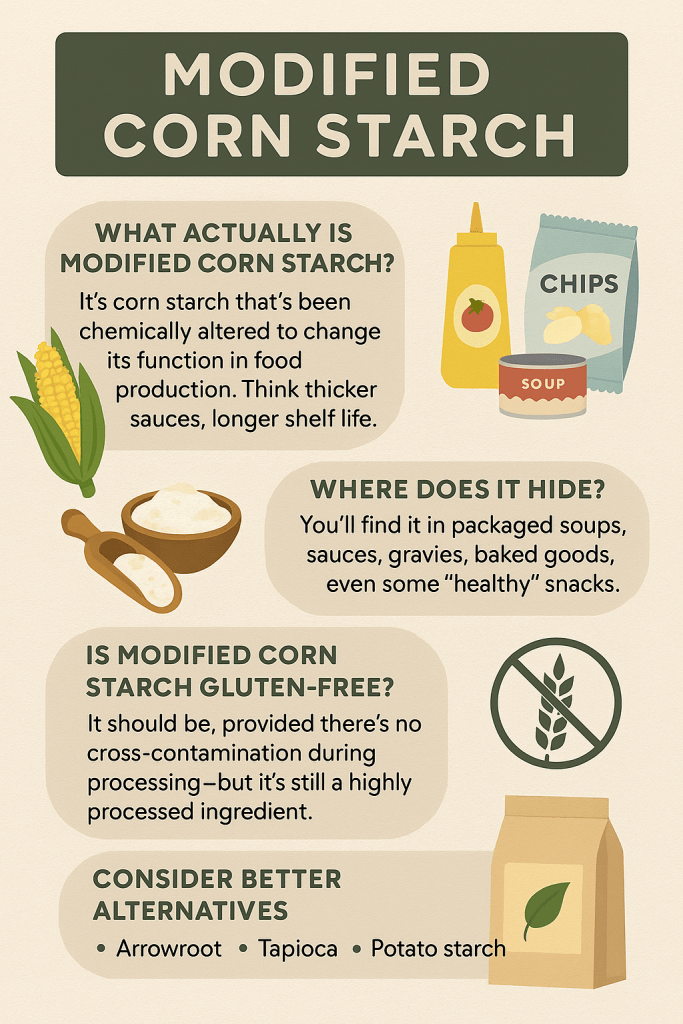
It begins as ordinary corn starch — the fine white powder you get from the endosperm of corn kernels. Then, manufacturers treat it with physical processes (like heat or acid), enzymes, or chemicals to change its properties. The goal? Better shelf life, improved texture, and resistance to heat or freezing.
It’s not the same as genetically modified (GM) corn, although in the US especially, modified starch often comes from GM sources. That’s a different can of worms — and one worth thinking about if you’re looking to avoid GM ingredients.
🌾 Modified Corn Starch – Is It Gluten-Free?
Modified corn starch is naturally gluten-free when it is made from corn. In the UK, if starch is derived from a gluten-containing cereal such as wheat, the cereal source generally has to be declared and emphasised in the ingredients list. People with coeliac disease should still check the full label and look for a gluten-free declaration where appropriate.
🏭 Why Do Manufacturers Use It?
Modified corn starch is cheap, effective, and reliable. It thickens sauces without separating. It makes puddings and fillings smooth and stable. It keeps baked goods fresher for longer.
In processed food, it’s a workhorse. But that’s not necessarily a good thing. You’ll find it in items that prioritise convenience over nutrition — think microwave meals, instant soups, sweets, and processed cheese.
It’s not added for health. It’s added for function.
🍽️ Modified Corn Starch – Does It Offer Any Nutritional Benefit?
Short answer? Very little beyond carbohydrate energy. Corn starch is already a highly refined ingredient, consisting predominantly of starch, with very little fibre, protein, vitamins or minerals compared with whole corn.
So, while it won’t harm you in small doses, it doesn’t help you either. It’s like eating air with a bit of starch in it.
🔎 What to Watch Out for on Labels
Modified corn starch can hide under many names. Look for:
- Modified corn starch
- Modified starch (with no source listed)
- E-numbers like E1404, E1412, E1420, E1422 (these indicate different modification methods)
If you follow a gluten-free diet or want to avoid overly processed foods, this is where it pays to slow down and read the small print.
🌱 Alternatives for Thickening
Depending on the recipe, alternatives include:
- Arrowroot powder – useful for sauces and gravies
- Tapioca starch – useful for baking and thickening
- Psyllium husk – adds fibre and structure
- Ground flax or chia – add fibre and help bind foods
- Potato starch – useful for thickening and gluten-free cooking
Some, particularly flax, chia and psyllium, contribute considerably more fibre than refined starches, while others such as tapioca, arrowroot and potato starch mainly provide a different functional thickening option.
🌿 Final Thoughts
Modified corn starch might be technically gluten-free, but it’s still a highly processed ingredient. It’s not inherently dangerous, but it’s also not particularly nourishing. It’s in many ultra-processed foods, which, according to current research, could affect long-term health.
If you eat it occasionally, it’s unlikely to do much harm. But if you want to keep your food clean and whole — look for alternatives, and keep an eye on labels.
“Want to uncover another processed ingredient used in everyday products? Have a read through our breakdown of pregel starch and its surprising side effects.”
Modern food labels can feel overwhelming, especially when unfamiliar ingredients appear in everyday products. Taking a calm, mindful approach to reading labels encourages awareness without judgement or fear. Our Wellbeing page explores simple ways to stay present, make conscious choices, and maintain balance in daily life, helping food decisions feel more informed and less stressful.