
🌿 Benefits of Eating Less Food – A Natural Approach to Better Energy and Balance
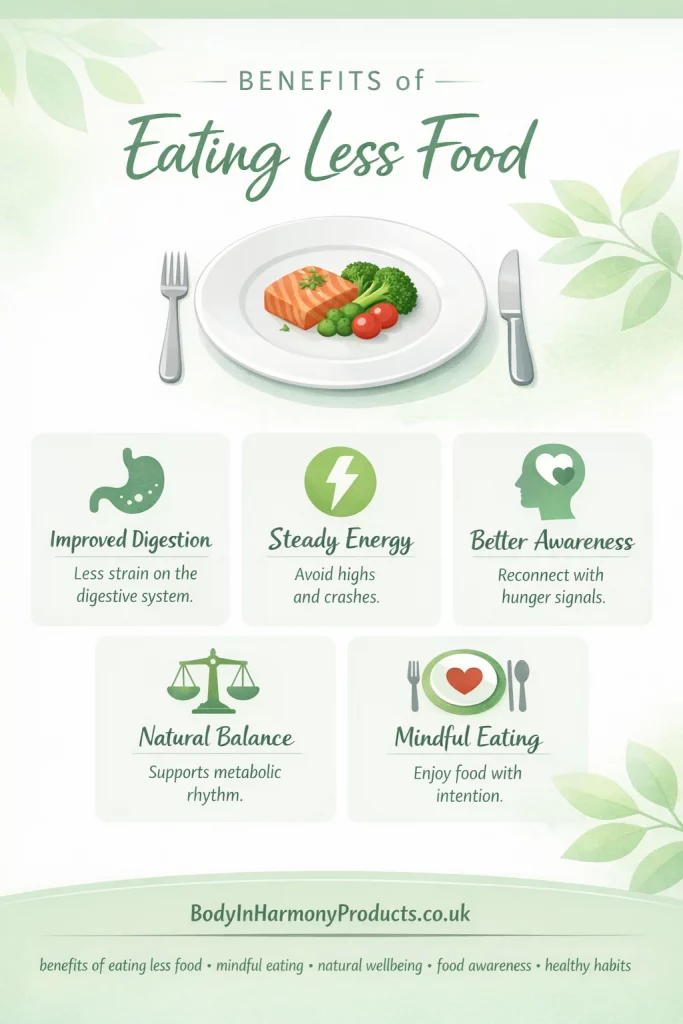
⚖️ Benefits of eating less food for natural balance and wellbeing
In today’s fast-paced world, food is always within reach. However, when we pause and reflect, we begin to question whether constant eating truly supports our health. The benefits of eating less food are not about restriction. Instead, they centre on awareness, balance, and reconnecting with natural hunger signals.
Historically, humans did not eat continuously throughout the day. Instead, meals were spaced naturally, allowing the body time to rest and reset. As a result, many people now find that reducing food intake slightly, while maintaining quality nutrition, can support overall wellbeing.
When we eat with intention rather than habit, we often feel lighter, clearer, and more energised.
🌿 An Ayurvedic Herbalist Perspective
Ayurveda has traditionally placed considerable importance on both how much we eat and how well we digest it.
Overeating is traditionally considered capable of burdening Agni, the digestive capacity. Equally, undereating can leave the body inadequately nourished.
The traditional principle is therefore not simply “eat less”.
It is to eat an amount appropriate to your digestion, constitution, activity and appetite.
From an Ayurvedic herbalist perspective, I find that much more useful than rigid portion rules.
Eat enough to feel nourished, but not so much that every meal leaves you uncomfortable and heavy.
⚡ Benefits of Eating Less Food for Digestion and Energy
Large or frequent meals can leave some people feeling heavy, bloated or sluggish.
Eating slightly smaller portions, or simply leaving more space between meals, may feel more comfortable because the stomach has time to empty before the next meal arrives.
Potential benefits include:
- less heaviness after meals
- better awareness of hunger and fullness
- fewer unnecessary snacks
- easier calorie control
- more structured eating habits
However, eating less frequently is not automatically healthier.
A systematic review of 16 clinical trials comparing lower and higher meal frequency found no clear overall advantage for either pattern on cardiometabolic health. That is useful because it shows that food quality, total intake and the individual still matter more than simply counting meals.
Eating Frequency and Cardiometabolic Health – Systematic Review
🧠 How the body responds – benefits of eating less food explained
The body is incredibly adaptable. When food intake is slightly reduced, it does not simply “struggle”. Instead, it begins to work more efficiently.
For example:
- The body may use stored energy more effectively
- Blood sugar levels can become more stable
- Hunger hormones begin to regulate naturally
As a result, you may feel more in control of your eating patterns. Furthermore, this approach supports a more natural rhythm, rather than one driven purely by routine or habit.
🍽️ Benefits of eating less food and mindful portion awareness
One of the most powerful shifts comes from simply becoming more aware of portion sizes. Often, we eat more than we need, not because of hunger, but because of habit or availability.
By gently reducing portions, you may notice:
- Greater satisfaction from meals
- A stronger connection to fullness cues
- Less reliance on constant snacking
In addition, mindful eating encourages you to slow down, enjoy your food, and recognise when your body has had enough. This creates a more balanced and sustainable relationship with food.
🌿 A Natural Approach to Eating Less
It is important to understand that the benefits of eating less food do not come from extreme restriction. Instead, they come from balance and awareness.
A simple approach includes:
- Eating when genuinely hungry
- Choosing whole, nutrient-dense foods
- Allowing time between meals
- Avoiding eating purely out of habit
- Listening to your body’s signals
Therefore, rather than following strict rules, you begin to trust your body’s natural rhythm.
🔗 Supporting Your Journey with Food Awareness
If you are looking to build a more balanced relationship with food, it helps to understand how everyday choices support long-term wellbeing.
A great place to start is exploring food awareness and natural eating habits through our cornerstone guide:
Food for Wellbeing – Natural Choices for Everyday Balance
This guide brings everything together, helping you make calm, confident choices that align with your body.
🌱 Final Thoughts
The benefits of eating less food are not about doing less for your body, but about giving it the space it needs to function at its best.
When you move away from constant eating and begin to listen to your natural hunger signals, everything starts to feel more balanced. Energy improves, digestion becomes smoother, and your relationship with food shifts in a positive way.
Ultimately, it is not about eating less for the sake of it. Instead, it is about eating with awareness, intention, and trust in your body.