
Table of Contents
Toggle🌰 Acorn Flour Nutrition: Benefits, Uses and How It Compares
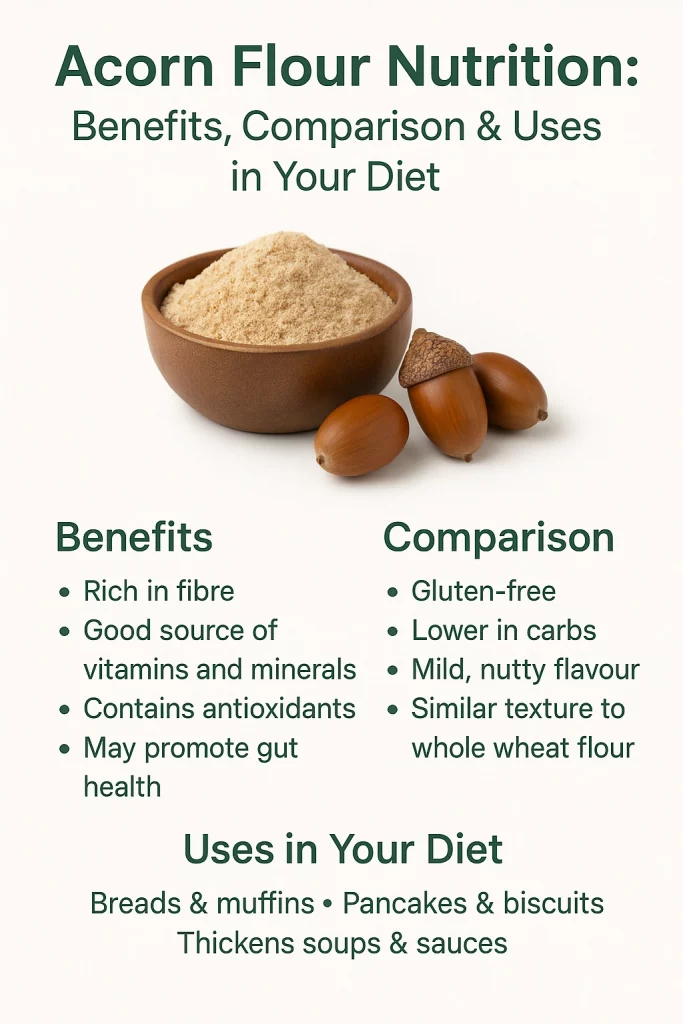
Acorn flour nutrition is attracting attention again as more people rediscover traditional foods and naturally gluten-free ingredients.
Made from properly prepared oak acorns, this distinctive flour provides fibre, unsaturated fats, minerals and polyphenols, giving it a very different nutritional profile from ordinary wheat flour.
From both a nutrition and traditional herbal perspective, acorn flour is interesting because it sits somewhere between a staple food and an old wild-food ingredient with a distinctive nutrient profile.
🌳 What Is Acorn Flour?
Acorn flour is made from the fruit of oak trees in the Quercus genus.
The acorns are shelled, processed to reduce tannins, then dried and ground into flour.
Traditional preparation often involves leaching, because high tannin levels can make raw acorns extremely bitter and may reduce the absorption of some nutrients.
🥣 Acorn Flour Nutrition and Its Nutritional Profile
The exact composition varies between oak species and growing conditions.
Research on Quercus rotundifolia flour found useful amounts of:
- dietary fibre
- unsaturated fats
- potassium
- phenolic compounds
- plant antioxidants
Oleic acid was one of the main fatty acids identified, which gives acorn flour an interesting fat profile compared with many cereal flours.
You can see the detailed analysis here:
Acorn Flour Nutritional and Phenolic Profile – PubMed Central
🌿 Fibre and Digestive Health
One of the most useful acorn flour benefits is its fibre content.
Dietary fibre supports normal bowel function and helps increase stool bulk.
Some fermentable fibres also act as food for bacteria living in the large intestine, which is why fibre-rich foods are important for gut health.
❤️ Unsaturated Fats and Heart-Friendly Eating
Unlike ordinary wheat flour, acorn meal can contain a meaningful amount of fat.
Much of this comes from unsaturated fatty acids, including oleic and linoleic acid.
Unsaturated fats can form part of a heart-friendly diet when they replace excessive saturated fat.
That is a much stronger claim than saying acorn flour directly lowers cholesterol or blood pressure.
🍞 Acorn Flour and Blood Sugar
The combination of fibre, fat, starch and polyphenols has also led researchers to study how acorn-based foods may influence glucose metabolism.
A small randomised clinical trial involving people with type 2 diabetes compared muffins containing acorn flour with ordinary wheat muffins.
The researchers found improvements in some appetite measures, while changes in HbA1c, triglycerides and HDL cholesterol were promising but not strong enough to claim a treatment effect.
So acorn flour nutrition may be interesting for metabolic health, but it should not be presented as a therapy for diabetes.
🌾 Acorn Flour vs Wheat Flour
Quercus flour has a very different composition from wheat flour.
Depending on the species, it may provide more:
- fibre
- unsaturated fats
- potassium
- polyphenols
However, it usually contains less protein than wheat flour and does not contain gluten.
That changes how it behaves in baking.
It normally works better as part of a flour blend rather than as a direct 1:1 substitute.
🌰 Acorn Flour vs Almond Flour
Both are naturally gluten-free, but they are not nutritionally identical.
Almond flour generally contains more protein and more fat.
Acorn flour tends to contain more starch and has a more earthy, slightly sweet flavour.
Neither is automatically better.
The best choice depends on the recipe and what you want from the food nutritionally.
🌾 Is Acorn Flour Gluten-Free?
Pure acorn flour is naturally gluten-free.
That makes it useful for gluten-free baking.
However, people with coeliac disease still need to check packaging carefully because cross-contamination can happen during milling, processing or storage.
The NHS guidance on coeliac disease explains why naturally gluten-free foods still need careful handling.
🥞 How to Use Acorn Meal
Its nutty flavour works well in:
- pancakes
- muffins
- biscuits
- crackers
- bread blends
- pasta
- porridge
Because it lacks gluten, start by replacing only part of the flour in a familiar recipe.
⚠️ Proper Processing Matters
Raw acorns should not simply be ground and eaten.
Many oak species naturally contain substantial levels of tannins.
Leaching and other preparation methods help reduce bitterness and improve palatability.
Research into food processing shows that tannin levels can be reduced significantly through soaking and related preparation methods.
Read the research on processing and tannin reduction
If buying ready-made acorn flour, choose a product intended specifically for human consumption.
✅ Acorn Flour Benefits: The Bottom Line
Acorn flour is a genuinely interesting traditional food.
It can provide fibre, unsaturated fats, minerals and polyphenols, while also offering a naturally gluten-free alternative to conventional flours.
The research into blood sugar, appetite and metabolic health is interesting, but still developing.
For me, the real value of acorn meal is much simpler.
It is an old food with a distinctive nutritional profile that deserves a place alongside modern grains, nuts and alternative flours.
For more ideas around traditional foods and natural eating, explore our Holistic Wellbeing section.