
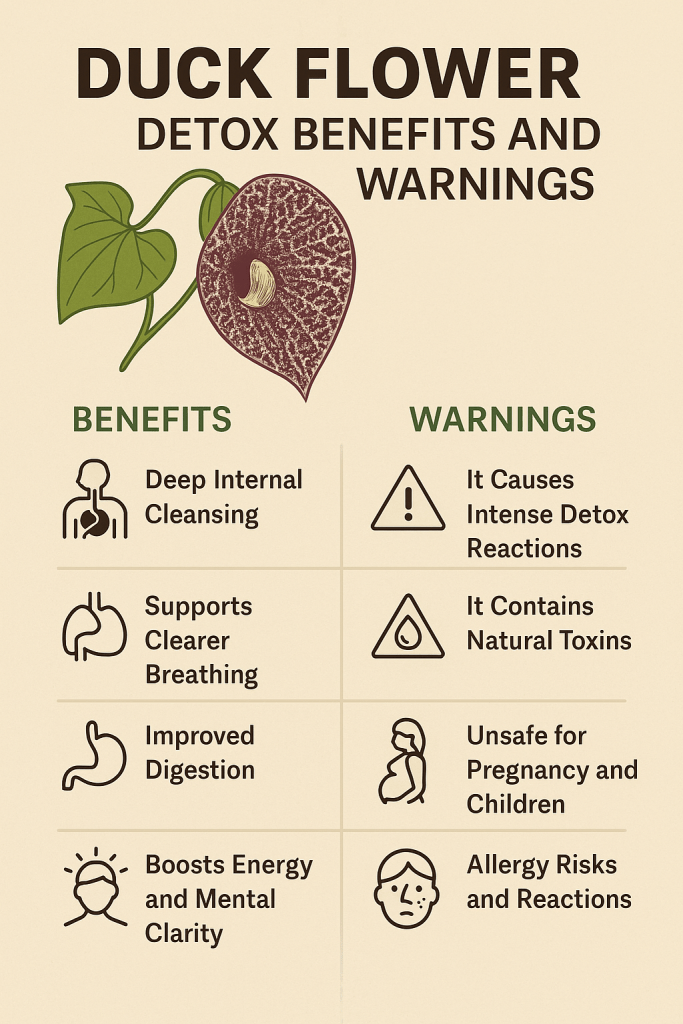
🪷 Duck Flower Benefits and Warnings: What You Need to Know
Duck flower has become popular in natural-health circles because of the intense purge it can produce.
Supporters often describe feeling lighter, clearer or more energised afterwards. However, duck flower comes from Aristolochia grandiflora, and that plant family also contains compounds linked with serious kidney toxicity.
As a qualified Diet and Nutritional Advisor and practitioner of Ayurvedic Herbalism, I think both sides need explaining properly. Traditional use and plant chemistry matter, but so does modern toxicology.
🌸 What Is Duck Flower?
Duck flower is Aristolochia grandiflora, a tropical climbing plant found in Central America and the Caribbean.
Different Aristolochia species have been used traditionally for digestive complaints, fever, inflammation, snake bites and other conditions.
Modern research has also identified biologically active compounds within the genus.
A review covering 141 published studies found antioxidant, antibacterial, anti-inflammatory, antiparasitic and several other biological activities associated with extracts or isolated compounds from different Aristolochia species.
However, that does not mean every species, preparation or dose produces those benefits safely in humans.
If you want to look at the research behind this, this PMC review of Aristolochia extracts and biological activity examines both traditional uses and modern pharmacological findings.
🌿 What Are the Claimed Duck Flower Benefits?
Most modern duck flower use centres around detoxing.
People commonly report:
- rapid bowel emptying
- vomiting
- sweating
- reduced bloating afterwards
- temporary feelings of lightness or mental clarity
There are also traditional reports involving digestive complaints and other uses of A. grandiflora. Research documenting medicinal plants from the Americas records traditional use of this species for stomach complaints and snake bites.
The difficulty is separating a traditional use or biological effect from a clinically proven health benefit.
For example, if a plant triggers diarrhoea, it will empty the bowel quickly. That does not necessarily mean it has removed toxins stored throughout the body.
🧼 Is the Duck Flower Purge Really a Detox?
This is where I would be careful with the terminology.
Your liver chemically processes substances circulating in the body, while your kidneys filter the blood and regulate waste, fluids and electrolytes.
Vomiting and diarrhoea work differently.
They rapidly empty parts of the digestive tract and can cause significant losses of both water and electrolytes.
So although people may describe the experience as a cleanse, the purge itself is not proof that toxins or mucus have been removed from tissues.
⚠️ The Important Safety Issue
Duck flower belongs to the Aristolochia genus.
This genus is well known for compounds called aristolochic acids.
These compounds have been extensively studied because they can damage kidney cells. During metabolism, reactive derivatives can also bind to DNA, producing mutations associated with certain urinary-tract cancers.
A detailed scientific review describes aristolochic acids as nephrotoxic and carcinogenic and explains the mechanisms involved in aristolochic-acid nephropathy.
This changes how I would approach the plant.
The fact that Aristolochia also contains compounds showing interesting biological activity does not cancel out the toxicity concern.
Both facts can be true at the same time.
🌱 Does Correct Preparation Make Duck Flower Safe?
This is where internet discussions can become misleading.
Traditional herbal medicine normally considers the correct plant, plant part, preparation, amount and individual constitution.
That principle is familiar in Ayurvedic herbalism as well. A herb is not simply labelled “good” because it produces a noticeable response.
However, with Aristolochia, there is currently no well-established oral detox dose of A. grandiflora that I could confidently describe as safe based on human clinical evidence.
That is an important distinction between pharmacological potential and something suitable for home use.
🤢 Vomiting and Diarrhoea Are Effects, Not Proof of Healing
A strong reaction can make a remedy feel powerful.
But symptoms such as:
- repeated vomiting
- severe diarrhoea
- abdominal pain
- dizziness
- weakness
- dehydration
should not automatically be interpreted as a healing crisis or evidence that a detox is working.
They show that the body is responding strongly to what has been consumed.
🚫 Who Should Be Especially Cautious?
The potential risks are particularly relevant for anyone with:
- kidney problems
- liver problems
- dehydration
- pregnancy or breastfeeding
- regular medication use
- recent illness or surgery
But the aristolochic-acid issue is not limited to people who already have health problems.
Being healthy does not automatically remove the toxicological risk.
✅ Duck Flower: My View
Duck flower is more complicated than either side of the argument sometimes admits.
There is genuine research into the biological compounds found within the Aristolochia genus, including antioxidant, antimicrobial and anti-inflammatory activity.
There is also substantial evidence showing that aristolochic acids can damage the kidneys and DNA.
That means I would not dismiss the plant as having “no properties whatsoever”, but neither would I recommend a duck flower purge simply because it has been used traditionally or because people feel different afterwards.
For me, responsible herbalism means looking at the traditional knowledge, the pharmacology and the toxicology together.
If you are interested in gentler herbal approaches, you can also read my guide to Herbs for Calm and Relaxation.